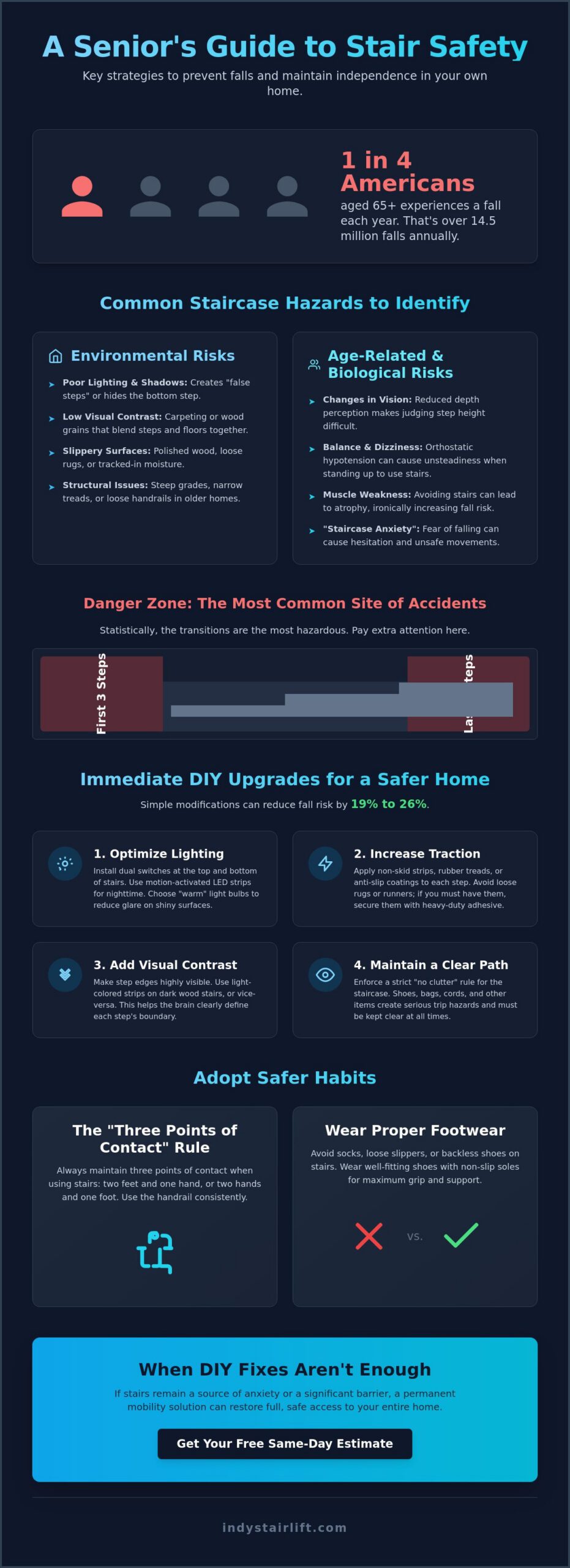
Did you know that one in four Americans aged 65 and older falls each year? According to 2026 data, that’s about 14.5 million falls annually, making the goal of avoiding falls on stairs for seniors a top priority for families who want to stay together safely at home. You’ve likely felt that sudden pang of worry while looking at your staircase, wondering if one misstep could change your life. It’s natural to feel anxious about your independence or the daunting costs of moving into assisted living.
We want to help you replace that worry with total peace of mind. This guide explores a complete hierarchy of safety strategies, from simple DIY fixes you can do today to professional mobility solutions that reclaim your entire living space. You’ll learn exactly which modifications are effective and when it’s time to seek expert help. If you’re ready to make your home safer right now, Get Your Free Same-Day Estimate and let us help you move between floors with confidence again.
Key Takeaways
- Identify “invisible” architectural hazards in older homes that impact your balance and vision as you age.
- Implement immediate DIY fixes like enhanced lighting and color-contrast strips to make step boundaries clear and safe.
- Adopt the “Three Points of Contact” rule and proper footwear habits to significantly lower your daily risk of slipping.
- Discover how a comprehensive strategy for avoiding falls on stairs for seniors helps you maintain your independence and stay in the home you love.
- Learn how to conduct a room-by-room safety audit to integrate stair solutions with other home modifications like walk-in showers.
Identifying Common Staircase Hazards in the Senior Home
Your home should be your sanctuary, but for many, the stairs start to feel like an obstacle course. As we age, our bodies change in ways that aren’t always obvious until we’re halfway up a flight of steps. Understanding the nuances of avoiding falls on stairs for seniors starts with recognizing that safety isn’t just about the wood and nails; it’s about how your eyes and ears interact with your environment. Changes in vision and balance can turn a familiar hallway into a source of hidden danger.
In many classic Indiana homes, staircases often feature steep grades and narrow treads that don’t meet today’s stricter building codes. These architectural pitfalls combine with “staircase anxiety,” a very real emotional weight that can make you dread moving between floors. When you start avoiding your stairs out of fear, your activity levels naturally drop. This leads to muscle weakness and atrophy, which ironically makes a fall more likely. It’s a cycle we want to help you break so you can keep enjoying every inch of your living space.
Environmental vs. Biological Fall Risks
Biological factors, like reduced depth perception or a sudden bout of dizziness when standing, play a huge role in home safety. This dizziness, known as orthostatic hypotension, often strikes right as you prepare to climb. On the environmental side, thick carpeting can blur the sharp edges of a step, making it hard to judge exactly where to place your foot. Comprehensive fall prevention strategies suggest that addressing these hazards together is the best way to stay secure. Statistically, the first and last three steps of any staircase are the most frequent sites of accidents because that’s where your body makes the biggest physical transition.
The “Bottom-Step Illusion” and Depth Perception
The floor and the final step often look identical under soft lighting. This “bottom-step illusion” is a major hazard because it tricks your brain into thinking you’ve reached level ground before you actually have. Shadows cast by overhead lights can also create “false steps,” leading to stumbles. You can test your stairs by looking down from the top; if the steps seem to bleed together into a single slope, your visual contrast is too low. This makes it incredibly difficult for your brain to map out a safe path.
Distinguishing between a “quick fix,” like replacing a dim bulb, and a “structural” issue, like a loose banister or a dangerously steep pitch, is the first step toward reclaiming your home. If you feel that your stairs have become more of a barrier than a feature, it might be time for a professional eye. You can Get Your Free Same-Day Estimate to see how modern solutions can fit into your existing space and restore your personal dignity and ease of use.
Immediate DIY Upgrades to Increase Stair Visibility and Traction
Making your home safer doesn’t always require a major renovation. Often, small adjustments to your environment provide the immediate security you need to feel confident again. When focusing on avoiding falls on stairs for seniors, the first step is often the simplest: making sure you can actually see where you’re going. Polished wood stairs are beautiful, but they can create a dangerous glare that hides the edge of each step. Research shows that home modifications like these can lead to a 19 to 26 percent reduction in falls, offering a significant boost to your daily safety.
Adding contrasting colors to the edges of your steps is a powerful way to define boundaries. If you have dark wood stairs, a light-colored non-skid strip on the nose of each tread can make a world of difference. You might also consider traction solutions like rubber treads or specialized anti-slip coatings. While area rugs or loose runners might look cozy, they are often “slip zones” that can shift under your weight. It’s usually safer to remove them entirely or ensure they’re professionally secured with heavy-duty adhesive.
Lighting Strategies for Maximum Safety
Effective lighting is your best defense against stumbles. You should have dual-switch systems so you can turn the lights on before you start climbing and off once you’ve safely reached the other floor. Motion-activated LED strips are another excellent addition; they provide a soft glow the moment you approach the stairs at night. When choosing bulbs, “warm” light is generally better for senior eye health because it reduces the harsh blue-light glare that can cause temporary “blind spots” on shiny surfaces.
Improving Grip and Reducing Trip Hazards
In Indiana, our weather plays a big role in home safety. High humidity or tracked-in snow can make wooden stairs unexpectedly slick. A “Clear Path” policy is essential; ensure no cords, shoes, or clutter ever rest on the landings. If you find that these DIY steps aren’t quite enough to make you feel secure, you can explore more permanent stair safety options that provide a mechanical safety net. By combining better visibility with reliable traction, you create a domestic environment that supports your independence.
Behavioral Strategies and Physical Safety Habits
While environmental fixes like lighting and traction are vital, your personal habits are just as important for avoiding falls on stairs for seniors. Safety is a partnership between your home and how you move through it. Many of us enjoy the comfort of fuzzy socks or loose slippers, but these are actually the leading cause of indoor slips. They offer almost no grip on smooth wood or tile, turning a simple trip to the kitchen into a significant risk. Transitioning to better habits doesn’t mean losing your comfort; it means gaining the confidence to move freely.
One of the most effective techniques you can adopt is the “Three Points of Contact” rule. This means that at any given moment, you should have three points of stability: two feet and one hand on the railing, or two hands and one foot. This simple shift ensures that if one foot slips, your other points of contact are already positioned to keep you upright. Additionally, be mindful of what you carry. Large laundry baskets or stacks of mail can block the view of your feet, making it impossible to judge step depth. If an item is too large to carry with one hand while the other holds the rail, it’s safer to use a small backpack or ask for a hand.
Physical preparation also plays a role in your security. Before you even approach the first step, try a few simple ankle circles or seated toe lifts. These quick movements “wake up” the muscles and joints responsible for stability. By improving your ankle flexibility, you’ll find it much easier to place your foot firmly and flatly on every tread.
Safe Navigation Techniques
If you live with knee pain or hip stiffness, the “Step-Together” method is a wonderful way to reduce strain. Instead of alternating feet like a traditional climb, bring your strongest foot up first, then bring your other foot to meet it on the same step. This keeps your weight centered and stable. Always take a “pause breath” at the top and bottom of the flight. This brief moment allows your blood pressure to catch up with your movement, preventing the sudden dizziness that often leads to stumbles.
The Role of Proper Footwear
Many people believe being barefoot is safest, but hardwood and tile can be surprisingly slick against bare skin. The best choice is a dedicated indoor shoe that stays on your foot securely. Look for a firm, low-profile sole that allows you to feel the edge of the step without being so thin that it lacks support. The ideal senior footwear for stair safety in 2026 is a well-fitted shoe with a firm, non-skid sole and a low heel that provides constant sensory feedback from the ground. If you find that even with great shoes the climb feels daunting, exploring reliable stairlift options can provide the ultimate safety net for your daily routine.
Mechanical Solutions: When DIY Fixes Are Not Enough
There often comes a moment when simple adjustments like better lighting or non-slip shoes no longer feel like enough. We call this the “tipping point.” It’s that quiet realization that you’ve started avoiding the second floor of your home or that you feel a sense of dread every time you look at the staircase. When the physical effort of climbing becomes a barrier to your lifestyle, it’s time to look at mechanical solutions. These tools aren’t just about avoiding falls on stairs for seniors; they’re about reclaiming the freedom to use your entire home without hesitation.
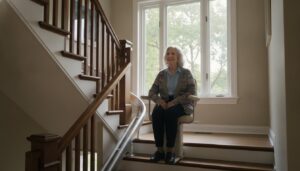
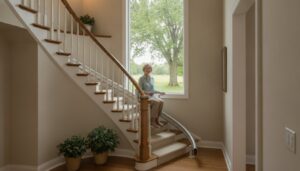
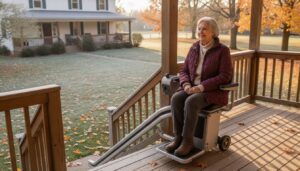
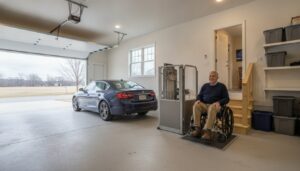
A common first step in this hierarchy of safety is the addition of a secondary handrail. Most older Indiana homes only have a rail on one side, but having support for both hands provides a massive boost in stability. However, if balance or muscle fatigue remains a concern, a straight stairlift offers a more comprehensive solution. For outdoor areas where porch steps or steep entryways create a challenge, vertical platform lifts provide a secure way to move between levels while staying comfortably in a seated position or using a mobility aid.
Comparing Stairlifts, Ramps, and Platform Lifts
Choosing the right equipment depends on your specific mobility needs and the layout of your property. While a ramp is excellent for small height transitions, a stairlift is often more practical for full-story changes because it preserves the architectural integrity of your home. If you’re working within a specific budget, a pre-owned stairlift can be a wonderful, reliable choice that provides the same level of security as a new model.
| Solution | Ideal Use | Space Requirement |
|---|---|---|
| Stairlift | Full-story indoor/outdoor access | Minimal; attaches to treads |
| Modular Ramp | Thresholds and short porch rises | Large; requires significant length |
| Platform Lift (VPL) | Outdoor decks and high porches | Moderate; vertical footprint |
Professional Installation and Warranty
It can be tempting to look at “DIY stairlift kits” online, but these often pose a major safety risk. Professional installation by a certified technician ensures that the equipment is perfectly calibrated to your specific staircase and weight requirements. Beyond the technical precision, professional services typically include warranties that offer long-term stability and peace of mind. You aren’t just buying a piece of hardware; you’re investing in a system that’s guaranteed to work when you need it most. Ready to reclaim your home? Get Your Free Same-Day Estimate to see how we can help you move with confidence again.
Creating a Long-Term Aging-in-Place Plan in Indiana
A safe home is more than just a collection of handrails and bright lights. It’s a cohesive environment designed to support your lifestyle as your needs evolve. While our focus has been on avoiding falls on stairs for seniors, a truly effective plan takes a “Whole Home” approach. This means looking at every high-traffic area, including the bathroom. Integrating stair safety with walk-in shower upgrades ensures that the two most common locations for domestic falls are secured simultaneously. By addressing these needs together, you create a seamless experience of safety that spans from your bedroom to your basement.
Conducting a room-by-room safety audit is the best way to start this journey. In Indiana, many of our historic homes feature unique layouts that require specialized knowledge. Working with a local, Indiana-owned company ensures you have a partner who understands these regional architectural nuances and is available for long-term service. These upgrades do more than just protect your physical health; they increase your home’s value and preserve your personal dignity. Planning today prevents a crisis tomorrow, allowing you to stay in the neighborhood you’ve called home for decades.
The Professional Home Safety Assessment
A professional mobility evaluation is a collaborative process. We walk through your home with you to identify potential risks you might have overlooked while focusing on avoiding falls on stairs for seniors. It’s a great time to involve family members in the conversation so everyone feels confident in the safety plan. If you have specific concerns about installation or equipment, you can refer to our FAQ page for answers to common safety questions. This assessment isn’t about pointing out what you can’t do; it’s about finding tools that help you do more.
Preserving Independence and Dignity
It’s time to reframe how we look at home modifications. We don’t view these as “medical devices” that signal a loss of ability. Instead, we see them as “liberation equipment” that empowers you to keep your routine exactly as it is. Reclaiming your home means you don’t have to limit your life to a single floor. Aging in place in Indiana is a community-supported journey that turns a house back into a forever home. Start your journey toward safety today. Get Your Free Home Assessment.
Reclaim Your Home and Your Peace of Mind
Securing your home is a journey that starts with awareness and ends with total freedom. We’ve explored how identifying architectural hazards and implementing simple DIY visibility fixes can make an immediate difference. By adopting safer behavioral habits and considering professional mechanical solutions when needed, you take active control over avoiding falls on stairs for seniors. Your home shouldn’t be a source of anxiety; it’s the place where you deserve to feel most secure and independent.
As a locally owned and operated team right here in Indiana, we’re dedicated to helping our neighbors stay in the homes they love. We provide professional one-day installation by certified technicians and stand behind our work with lifetime warranties and 24/7 on-call support. You don’t have to navigate these changes alone. If you’re ready to move between floors with ease and dignity again, Get Your Free Same-Day Estimate today. We’re here to help you protect your lifestyle and your domestic sanctuary for years to come.
Frequently Asked Questions
How can I make my stairs safer for seniors without a full renovation?
You can make immediate improvements by installing high-contrast non-slip strips on step edges and ensuring every light bulb is bright and functional. Adding a second handrail is another cost-effective way of avoiding falls on stairs for seniors without needing a contractor. These small changes create a safer environment today while you consider long-term solutions that preserve your independence and keep your domestic routine intact.
Is it safer for a senior to live on one floor or install a stairlift?
Living on one floor is a common strategy, but installing a stairlift is often the better way to reclaim your entire living space. Moving to a single-story home can be expensive and emotionally taxing. A stairlift allows you to stay in the home you love while ensuring you can access bedrooms or laundry rooms safely. It’s about maintaining your personal dignity and the lifestyle you’ve built over many years.
How do I know if my parent is struggling with the stairs but not telling me?
Look for subtle changes in their behavior, such as leaving items at the bottom of the stairs to carry up later or avoiding the second floor entirely. You might notice them “furniture walking” or breathing heavily after a climb. If they seem anxious or hesitant when approaching the staircase, it’s a clear sign that the stairs have become a barrier. Starting a gentle conversation now can prevent a future crisis.
Does Medicare cover the cost of stair safety modifications in Indiana?
Traditional Medicare generally doesn’t cover home modifications because they’re considered home improvements rather than medical equipment. However, in Indiana, you may find support through Medicaid waivers like the Pathways for Aging Waiver or the Community Integration and Habilitation Waiver. These programs are designed to help seniors age in place. We recommend checking with your local Area Agency on Aging for the most current grant opportunities available in 2026.
What is the best lighting for stairs to prevent falls?
The best lighting setup uses motion-activated LED strips along the baseboards or under each tread to eliminate shadows. You should choose “warm” bulbs with at least 800 lumens to provide clarity without creating a blinding glare on polished surfaces. Ensuring there are light switches at both the top and bottom of the flight is essential so you never have to navigate a dark staircase.
Are carpeted stairs safer than wood stairs for elderly people?
Low-pile, tightly woven carpet is often safer than wood because it provides better traction and cushioning. However, thick or shaggy carpet can be a trip hazard and may hide the edge of the step. If you have wooden stairs, adding transparent non-skid tape or rubber treads can provide the necessary grip without hiding the beauty of the wood. The goal is to maximize both stability and visual clarity.
Can I install a second handrail on a narrow staircase?
Yes, you can usually install a second handrail even on a narrow staircase to provide much-needed bilateral support. Residential building codes in 2026 generally require a minimum stairway width of 36 inches. If your stairs are narrow, a slim-profile rail can offer security without obstructing the path. Having a rail on both sides allows you to use both arms for balance, which is a key strategy in avoiding falls on stairs for seniors.
What should I do immediately after a senior falls on the stairs?
If a fall occurs, the most important step is to stay calm and not move the person immediately. Check for consciousness and ask them where they feel pain before attempting to help them up. If they can’t move or are in significant pain, call emergency services right away. Once the immediate medical needs are met, it’s vital to conduct a safety audit to identify why the fall happened and prevent it from occurring again.
Disclaimer
Indiana Home Safety and Mobility provides professional stairlift installation services for a wide range of nationwide and international stairlift brands. Each solution is selected based on an in-home, individual assessment to ensure the best fit for the customer’s specific mobility needs, home layout, and budget.
Our focus is on recommending stairlifts that offer the best combination of affordability, reliability, and low maintenance. By evaluating each situation on a case-by-case basis, we help customers choose the most practical and effective stairlift solution for safe, long-term use in their home.