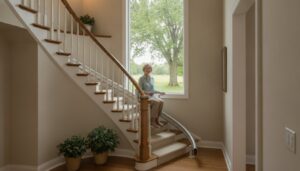
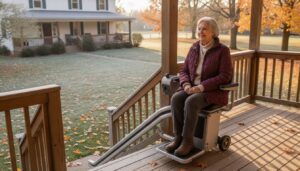
An Indiana winter doesn’t just bring snow; it often creates a season of isolation for homeowners who feel trapped by their own front steps. You might look at those icy stairs and feel a sense of dread, wondering if you’ll be stuck inside until the spring thaw. It’s completely normal to worry about machinery freezing or rusting in our unpredictable “freeze-thaw” climate. Finding a reliable outdoor stairlift for winter weather is about more than just convenience. It’s about the peace of mind that comes from knowing you can safely reach your driveway or mailbox every single day.
We understand that you need equipment as resilient as a Hoosier. You’ll discover how to choose a lift designed to operate reliably in temperatures as low as 0°F while staying protected from moisture and salt. We’ll also guide you through essential features like marine-grade covers and specialized tracks that prevent ice buildup. This guide previews the best winter-proof options, explains local Indiana assistance programs like the CHOICE grant, and shares how professional installation ensures your home stays accessible and safe throughout the harshest months of the year.
Key Takeaways
- Understand how a winter-ready lift protects you from the specific dangers of Indiana’s black ice and heavy snowfall.
- Identify the critical engineering features, like sealed internal components, that make an outdoor stairlift for winter weather truly reliable.
- Compare straight and curved rail designs to see which configuration makes clearing snow from your staircase easiest.
- Master the “Cover Always” rule and basic maintenance tips to keep your machinery running smoothly during a deep freeze.
- Learn why local professional installation is the safest way to ensure your lift meets Indiana building codes and remains weather-proof.
The Safety Stakes: Why Outdoor Mobility Matters Most in Winter
For many Indiana homeowners, the first frost marks the beginning of a long, quiet season spent indoors. An outdoor stairlift is much more than a standard mobility aid; it’s a specialized machine engineered specifically for external environments. Unlike indoor models, these units are built with weather-resistant finishes and sealed components to withstand the rain, sleet, and sub-zero temperatures we face every year. Installing an outdoor stairlift for winter weather ensures that the steps leading to your porch or driveway remain a path rather than a barrier to your independence.
The dangers of a typical winter are often hidden. Black ice can form on porch steps overnight, making even a short trip to the mailbox feel like a perilous journey. When visibility is low and the ground is slick, the risk of a life-changing fall increases significantly. This often leads to “winter isolation,” a common situation where seniors choose to stay inside for months to avoid the stairs. It’s a heavy emotional toll that affects your personal dignity and autonomy. You shouldn’t have to wait for spring to visit a neighbor or get into your car comfortably.
The Hidden Dangers of Indiana Winters for Seniors
Indiana’s climate is famous for its melt-and-freeze cycles. During the day, snow might melt into a thin layer of water, only to turn into invisible ice as the sun sets. This makes every step a gamble. Additionally, wearing heavy winter coats and boots can shift your center of gravity, making it harder to stay balanced. Trying to navigate snow-covered stairs also leads to overexertion, which puts unnecessary strain on your heart and joints during the coldest months of the year.
Reclaiming Your Independence Despite the Snow
Think of a Stair lift as a tool for liberation. It preserves your domestic environment by making the entirety of your property accessible again. For family members who live across town, it provides immense peace of mind. They don’t have to worry every time the forecast calls for flurries because they know you have a safe, mechanical way to bypass the slippery steps. Home safety doesn’t have a seasonal off-switch; your ability to move freely shouldn’t either. Choosing the right outdoor stairlift for winter weather means you can reclaim your daily routine without fear.
Engineered for the Elements: Key Features of Winter-Ready Stairlifts
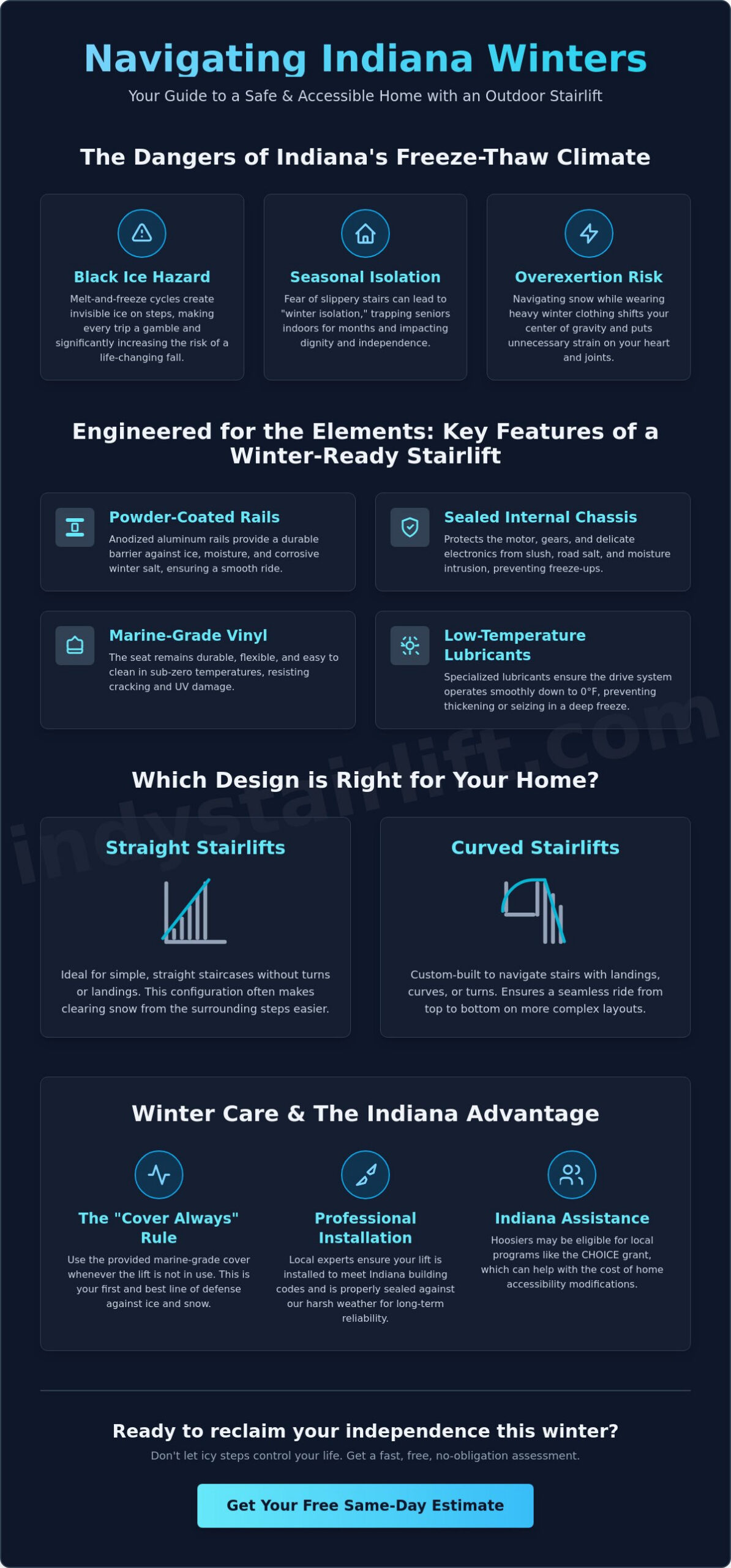
Indiana winters are notoriously hard on machinery. The combination of high humidity and sudden deep freezes creates a “freeze-thaw” cycle that can seize up standard equipment. To remain reliable, an outdoor stairlift for winter weather requires specific engineering that goes beyond what you’d find in an indoor model. It starts with the foundation: the rails. We recommend powder-coated or anodized aluminum rails because they don’t just resist rust; they actively repel the corrosive effects of moisture and winter salt. Inside the unit, a sealed internal chassis is essential to keep slush and road salt away from the delicate motor and gears.
The seat and controls must be equally tough. Most high-quality outdoor lifts use marine-grade vinyl and UV-resistant plastics. These materials stay flexible in the cold rather than becoming brittle and cracking. When considering your safety, it’s helpful to review the ADA Standards for stairways, which emphasize the importance of stable surfaces and handrail reliability. A winter-ready lift ensures these standards are met even when the stairs themselves are buried in snow. Key engineering features often include:
- Powder-coated aluminum rails: Provides a durable barrier against ice and salt corrosion.
- Sealed internal chassis: Protects the motor and electronics from moisture and slush.
- Marine-grade vinyl: Ensures the seat remains durable and easy to clean in sub-zero temperatures.
- Specialized lubricants: Prevents the drive system from thickening or seizing when the mercury drops.
Weather-Resistant Materials: Beyond Just a Plastic Cover
There’s a big difference between a device being “waterproof” and truly “weather-resistant.” Waterproofing might keep rain out, but weather-resistance means the mechanical parts can handle the expansion and contraction caused by temperature swings. For example, rocker switches and toggles are oversized on these models. This design allows you to operate the lift easily while wearing heavy winter gloves, so you don’t have to expose your hands to the biting wind. When you aren’t using the lift, a weighted weather cover is non-negotiable. It stays in place during high winds and provides an extra layer of protection against freezing rain.
Battery and Motor Performance in Sub-Zero Temperatures
Extreme cold is the natural enemy of batteries. In sub-zero weather, a battery’s charge and overall life cycle can drop significantly. This is why we use motors designed to start instantly, even when it’s 10 degrees outside. These systems often utilize constant-pressure electronics, which is a specialized type of circuitry that ensures a steady flow of power regardless of the outside temperature. To ensure your specific home is ready for the coming frost, you can get your free same-day estimate and speak with a local expert about these technical features.
Straight vs. Curved Outdoor Stairlifts: Choosing Your Winter Warrior
Every home in Indiana has its own unique layout, from simple porch steps to expansive multi-level decks. When you’re selecting an outdoor stairlift for winter weather, the shape of your staircase determines which “winter warrior” is right for you. Beyond just fitting the stairs, your choice impacts how easily you can manage the winter safety and mobility challenges that come with heavy snow and ice accumulation. You also need to consider your winter gear; heavy coats, boots, and extra layers add significant weight. Most reliable outdoor models are built to handle these seasonal extras, often supporting a weight capacity of up to 400 pounds to ensure you remain secure and stable.
Another critical factor is where you “park” the chair when it isn’t in use. If your staircase is exposed to the elements, we often look for ways to park the unit under the protection of a porch roof or an overhang. This simple step preserves the life of the electronics and ensures you aren’t sitting on a seat covered in fresh powder. Whether your path is a straight shot or a winding journey, the goal is to create a reliable bridge between your warm home and your car or mailbox.
Straight Outdoor Lifts: The Reliable Standard
If your stairs follow a single, unbroken path without any landings, straight stairlifts are usually the most practical choice. These systems are known for faster installation times and straightforward maintenance schedules. Because the rail is a single straight line, it’s much easier to keep clear of ice buildup. You can quickly sweep snow from the steps underneath the rail without having to navigate complex bends or joints. This simplicity makes them an excellent, high-value option for homeowners who want immediate relief from the fear of falling on slippery front steps.
Custom Curved Lifts: Navigating Complex Indiana Landscapes
Many Indiana homes feature beautiful multi-level decks or stairs with landings that require a custom solution. Curved outdoor lifts use precision engineering to follow the exact contour of your landscape. These rails are designed to remain perfectly stable even if the soil underneath shifts slightly during the intense winter frost cycles. A unique benefit of custom rails is the ability to design a “tuck-away” landing. This allows the chair to park around a corner, safely out of the path of snow sliding off your roof or accumulating in large drifts. While the engineering is more specialized, the result is a seamless journey from your driveway to your front door, regardless of how many turns your staircase takes. Choosing the right outdoor stairlift for winter weather means looking at your specific yard and finding the path that offers the most protection and ease of use.
Winter Maintenance and Operation: Keeping Your Lift Ice-Free
Indiana’s winters are beautiful, but they can be unforgiving on any outdoor machinery. While your lift is engineered to operate in temperatures as low as 0°F, a little proactive care ensures it stays reliable when the mercury drops. We recommend a simple “winterizing” routine before the first deep freeze hits. This isn’t just about protecting the motor; it’s about making sure your path to the car or mailbox remains clear and safe without any technical hiccups. One of the most important habits you can adopt is the “Cover Always” rule. Even if the sun is out, keeping the protective cover on when the lift isn’t in use is non-negotiable. It prevents freezing rain from coating the seat and keeps the controls from becoming encased in ice.
When you need to de-ice your stairs, you must be careful about what you use near your equipment. Standard road salt is highly corrosive and can damage the protective coating on your rails over time. Instead, use non-corrosive de-icers or focus on mechanical removal. Before a major storm arrives, take a moment to test your remote controls. If the batteries are low, the cold will drain them even faster. We suggest keeping a spare set of batteries inside your warm house so they’re ready to go when you need them most. These small steps provide the peace of mind that your outdoor stairlift for winter weather will be ready whenever you are.
Proactive Care: Preparing Your Lift for the First Frost
We always suggest a professional pre-winter checkup to ensure everything is in top shape. A technician can apply specialized lubricants that won’t thicken in the cold, which keeps the drive system moving smoothly. You should also look up at your roof and clear any nearby gutters to prevent ice dams from forming. If water drips onto the lift and freezes, it can create a thick layer of ice that is difficult to remove. This simple bit of home maintenance preserves your equipment and your safety throughout the season.
Snow and Ice Removal: Best Practices for Rail Safety
When snow starts to pile up, reaching for the right tool is vital for the longevity of your lift. Use a soft-bristled brush to sweep snow away from the rail and the steps rather than a heavy shovel. Avoid metal shovels at all costs, as they can scratch the aluminum rail and compromise its weather-resistant finish. Your lift’s obstruction sensors are your best friend during a snowstorm because they automatically stop the chair if they detect a snowdrift on the track, preventing any damage to the motor. If the rail does become encased in thick ice, don’t try to chip it away; instead, use a cloth soaked in warm water to gently melt the ice. To ensure your home is fully prepared for the coming frost, Get Your Free Same-Day Estimate today.
Professional Installation and Local Support in Indiana
Choosing the right equipment is only half the battle. While it’s tempting to think of a stairlift as a simple appliance, a DIY approach is incredibly dangerous for outdoor, weather-exposed units. A self-installed lift often lacks the specialized sealing and structural anchoring required to survive a Midwest “deep freeze.” When you trust a professional team, you aren’t just paying for labor; you’re investing in the technical precision that ensures your outdoor stairlift for winter weather remains a reliable lifeline. We treat every home as if it belonged to our own family, ensuring that every bolt is secure and every electrical connection is perfectly shielded from the elements.
Local accountability is the cornerstone of our service. Unlike national companies that might send a third-party contractor from three states away, we’re your neighbors. We understand the urgency that comes when a winter storm is in the forecast. Knowing that your installer is just a phone call away provides a level of tranquility that “big box” retailers simply can’t match. We also offer lifetime warranties on many components, which acts as your ultimate shield against mechanical failures during the coldest months. If something feels off, you don’t have to navigate a complex corporate phone tree; you just call us.
We know that once you decide to reclaim your independence, you don’t want to wait. That’s why we prioritize a “One-Day Installation” promise. According to industry standards, a straight stairlift installation typically takes 2 to 4 hours, while a curved model can be completed in 4 to 6 hours. This means we can often get your safety system in place before the next major snowfall hits, ensuring you never have to spend another day trapped indoors by icy steps.
Why Expert Installation Prevents Winter Mechanical Failures
Indiana’s soil and concrete are subject to intense “frost heave,” where the ground expands and shifts as it freezes. Expert stairlift installation involves using specific anchoring techniques that account for these shifts, preventing the rail from becoming misaligned. We also focus on precise electrical grounding. Outdoor units are more susceptible to power surges during winter storms, and professional grounding protects the sensitive “constant-pressure” electronics that keep your lift moving in sub-zero temperatures.
24/7 Support: Your Safety Doesn’t Take a Snow Day
Your need for mobility doesn’t stop just because the weather turns sour. We provide on-call technicians who are ready to assist you even during the peak of winter. Because we’re a locally owned business, we understand Indiana weather first-hand and keep our service vehicles equipped to reach you when it matters most. We believe that your home should be a place of total liberation, not a place where you feel confined by the seasons. To start your journey toward a safer, more accessible winter, Get Your Free Same-Day Estimate and let us help you stay mobile all year long.
Reclaim Your Independence This Winter
An Indiana winter shouldn’t force you to choose between your safety and your freedom. By selecting an outdoor stairlift for winter weather designed for our “freeze-thaw” climate, you’re investing in more than just machinery; you’re securing your ability to enjoy every part of your property. Choosing weather-resistant engineering and sticking to a “Cover Always” habit ensures your path stays clear and your motor stays protected. You’ve seen how professional installation is the only way to account for Indiana’s shifting soil and deep freezes, keeping your lift stable and safe for years to come.
As locally owned Indiana experts, we’re here to support your journey toward year-round mobility. Our team provides professional one-day installation to get your safety system in place before the next storm, and our 24/7 emergency support means we’re always just a phone call away. You deserve to feel confident and secure every time you leave your house. Take the first step toward a worry-free winter today.
Get Your Free Same-Day Estimate
We look forward to helping you reclaim your porch and your peace of mind. Stay safe and stay mobile.
Frequently Asked Questions
Can I use my outdoor stairlift while it is snowing?
You can use your lift during a snowfall as long as you clear the rail and steps of any major accumulation first. Most outdoor models are designed to operate in temperatures as low as 0°F. However, heavy snow can trigger the safety obstruction sensors, causing the lift to stop for your protection. We recommend sweeping the track with a soft brush before your journey to ensure a smooth, uninterrupted ride to your destination.
What happens if the power goes out during a winter storm while I’m on the lift?
Your safety remains protected because our outdoor lifts run on a battery-powered system. If the power fails during an Indiana blizzard, the on-board batteries will continue to function, allowing you to complete your trip and reach safety. These batteries charge automatically when the lift is parked at a landing. We suggest testing your battery health before the peak of winter to ensure it holds a full charge for emergency situations.
Will road salt from my shoes damage the stairlift seat or footrest?
Road salt won’t immediately damage the high-quality marine-grade vinyl and powder-coated aluminum used in our lifts. These materials are chosen specifically for their ability to resist corrosion and moisture. To preserve the appearance and longevity of your equipment, it’s a good idea to wipe down the footrest with a damp cloth after a particularly slushy day. This simple step prevents salt crystals from building up and scratching the protective finishes.
Do I need to remove the stairlift and store it inside during the winter?
No, you don’t need to move your lift indoors because it’s engineered to stay outside year-round. An outdoor stairlift for winter weather is built with weather-sealed components and specialized lubricants that won’t seize in the cold. Removing the unit would actually be counterproductive, as the lift is your primary tool for navigating icy steps safely. Instead, simply use the weighted weather cover to protect the seat and controls during heavy storms.
How do I keep the stairlift rail clear of ice without damaging the motor?
The best way to clear ice without harming the drive system is by using a soft-bristled brush or a cloth soaked in warm water. Avoid using metal scrapers or heavy road salt, as these can damage the rail’s protective coating. If the ice is particularly thick, you can use a non-corrosive de-icer that is safe for aluminum. Keeping your gutters clear also helps prevent water from dripping onto the rail and freezing into dangerous sheets.
Is there a weight limit change when I am wearing heavy winter coats and boots?
The mechanical weight limit of the lift doesn’t change, but you must account for the extra weight of your winter gear. Heavy boots and thick coats can add 10 to 15 pounds to your total weight. Most of our outdoor models support between 300 and 400 pounds, which typically provides plenty of room for seasonal clothing. If you’re concerned about capacity, we can help you choose a heavy-duty model that offers even more support and stability.
What should I do if the stairlift seat is frozen in the folded position?
If you find the seat is stuck, don’t try to force it open, as this could strain the hinges. Instead, use a hair dryer on a low setting or a warm, damp cloth to gently thaw the ice around the moving parts. This usually takes just a few minutes and prevents any mechanical damage. Once the seat is moving freely, wipe it dry to prevent it from refreezing, and always remember to use your weather cover afterward.
Does insurance or Medicare cover outdoor stairlifts for winter safety?
Medicare typically doesn’t cover outdoor lifts, but Indiana residents have several local options for financial assistance. The CHOICE program and the Aged and Disabled (A&D) Waiver are state-specific resources that can help cover home modifications for those who qualify. Additionally, the CICOA Safe at Home program offers support for low-income seniors. We recommend calling your local Area Agency on Aging at 800-986-3505 to explore the grants available for your specific situation.
Disclaimer
Indiana Home Safety and Mobility provides professional stairlift installation services for a wide range of nationwide and international stairlift brands. Each solution is selected based on an in-home, individual assessment to ensure the best fit for the customer’s specific mobility needs, home layout, and budget.
Our focus is on recommending stairlifts that offer the best combination of affordability, reliability, and low maintenance. By evaluating each situation on a case-by-case basis, we help customers choose the most practical and effective stairlift solution for safe, long-term use in their home.