You might think a massive, zigzagging ramp is the only way to stay in your home, but for many Indiana families, that 80-foot aluminum eyesore is actually the least practical option. We know it’s frustrating to look at your front porch and see a barrier rather than a welcoming entrance. You’ve spent 25 years or more building memories in your neighborhood, and the thought of moving because of a few stairs is heartbreaking. That’s why handicap platform lifts have become the preferred choice for those who want to reclaim their freedom without destroying their home’s curb appeal.
In this guide, you’ll discover how these lifts provide a space-saving, reliable alternative to bulky ramps. These systems offer total property accessibility while using 90 percent less square footage than a traditional wooden incline. They’re built to handle the 4 inches of heavy slush we often see in a typical Indiana January, ensuring you never feel trapped by the weather again. We’ll show you how these compact, quiet solutions help you maintain your independence and stay in the family home you love for years to come.
Key Takeaways
- Discover how a vertical platform lift acts as a compact, reliable mini-elevator to help you move safely over porches and stairs.
- Learn why handicap platform lifts are often a more practical, space-saving alternative to long, cumbersome wheelchair ramps for your property.
- Identify the essential safety sensors and technical standards required to ensure a secure and dignified experience for mobility device users.
- Explore how to navigate Indiana-specific building permits and weatherproofing needs to keep your home accessible through every season.
- See how our “neighborly” approach and expert installation process can help you reclaim your independence and stay in the home you love.
What is a Handicap Platform Lift and Why Does Your Indiana Home Need One?
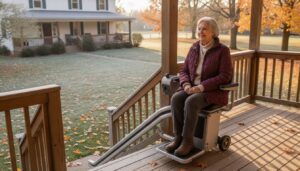
Thinking about how to get into your own home shouldn’t be a source of daily stress. For many of our neighbors across Indiana, those few steps leading to the front porch have become a significant barrier to independence. A vertical platform lift, or VPL, acts like a personal mini-elevator designed specifically for your porch or deck. These handicap platform lifts provide a smooth, safe way to travel vertically, allowing you to remain in the home you love without the physical strain of navigating stairs or the massive footprint of a traditional ramp.
The primary function of a VPL is straightforward; it moves a person using a wheelchair, power chair, or scooter directly up and down over obstacles. Unlike a ramp that requires 12 inches of length for every 1 inch of rise, a platform lift occupies a small, square footprint of about 5 feet by 5 feet. This efficiency is why we see a 35% increase in lift installations across the state as we move through 2026. Homeowners are prioritizing yard space and curb appeal while still demanding total accessibility. A Wheelchair lift serves as a bridge between your driveway and your front door, removing the fear of falling and replacing it with a sense of quiet confidence.
The emotional impact of this technology is often more profound than the mechanical benefits. We’ve spoken with hundreds of families who describe the first time they used their lift as a “day of liberation.” Reclaiming the ability to enter and exit your home without waiting for a family member or a caregiver to assist you restores a sense of dignity that is hard to quantify. It’s about more than just moving between levels; it’s about the freedom to go to the mailbox, visit a neighbor, or head to a doctor’s appointment on your own terms. We believe your home should be your sanctuary, not a place where you feel restricted.
This renewed freedom extends beyond the front door. For many, it means confidently planning trips to the doctor, family gatherings, or even the airport. While finding the right at-home solution is the first step, it’s also helpful to know about transportation services that can continue that journey. As an example of a service focused on reliable transit, you can discover Edina Taxi MN, a company specializing in airport and local transportation.
VPL vs. Residential Elevator: Understanding the Difference
While both devices move you between floors, vertical platform lifts are far more cost-effective and easier to install than full residential elevators. A home elevator typically requires a deep pit, a hoistway, and significant structural changes to your house, which can cost upwards of $40,000. In contrast, VPLs are designed specifically for accessibility and can often be installed in a single day. At Indiana Home Safety & Mobility, we focus on handicap platform lifts because they offer a practical, reliable solution without the need for a major construction project. They are built for the singular purpose of keeping you mobile and safe.
The ‘Porch Lift’ Phenomenon in Indianapolis Neighborhoods
We see a growing trend in historic areas like Fountain Square and Broad Ripple where homes sit on high crawl spaces or have tall, narrow porches. These properties often have small lots where a 30-foot ramp would literally run into the street or wrap around the entire house. A VPL solves this “high porch” problem by fitting neatly next to the existing stairs. It’s a weather-resistant platform that travels vertically up to 14 feet. This space-saving design allows you to maintain your home’s historic charm while ensuring it meets your modern mobility needs. We take pride in helping our local community find these clever, space-efficient ways to stay rooted in their neighborhoods.
- Safety: Non-slip platforms and emergency stop buttons come standard.
- Durability: Built to withstand Indiana’s harsh winters and humid summers.
- Simplicity: Easy-to-use constant pressure switches ensure you are always in control.
- Reliability: Battery backup systems keep you moving even during a power outage.
Key Features and Technical Standards for Platform Lifts
Choosing the right equipment means looking beyond the metal and gears. We want you to feel a sense of total security every time you step onto your lift. Most residential handicap platform lifts are designed with a weight capacity ranging from 600 to 750 lbs. This range comfortably accommodates a heavy motorized wheelchair and an adult user. It provides the heavy-duty support needed for daily use while maintaining a compact footprint in your entryway. These weight standards ensure the motor isn’t strained, which extends the life of your investment by 25% or more compared to undersized units.
Safety is our absolute priority. We look for models with sensitive under-platform sensors. These sensors act as a second set of eyes; they stop the lift immediately if they detect a pet, a stray toy, or any obstruction underneath the platform. This feature prevents accidents and protects your equipment from mechanical damage. For those who may have limited hand dexterity, we recommend constant pressure switches. These controls require only a light, steady touch to keep the lift moving. If you let go, the lift stops instantly. It’s a simple, intuitive way to stay in control of your movement without needing to grip or turn small knobs.
Indiana weather is notoriously unpredictable. A sudden summer thunderstorm in June or July can knock out power for hours. We ensure your independence isn’t tied to the electrical grid by installing robust backup power systems. These batteries provide enough energy for 10 to 15 full trips during a total power outage. You won’t be stranded outside or stuck on a different level of your home just because the lights went out. This reliability offers peace of mind to families who want to know their loved ones are safe regardless of the weather.
Drive Systems: Screw Drive vs. Hydraulic
The ACME screw drive system is a favorite for Indiana homes because of its incredible reliability. It uses a large threaded rod to move the platform up and down smoothly. Unlike hydraulic systems, it doesn’t require a separate machine room or fluid that might leak on your floor. It’s also remarkably quiet. If you live in a peaceful neighborhood in Carmel or Fishers, you’ll appreciate how the lift operates without disturbing the rest of the household. Maintenance is straightforward; a simple annual checkup keeps everything running like new for 15 years or more.
Safety Gates and Interlocks
A lift is only as safe as its entry points. We install top landing gates to act as a sturdy barrier when the lift is at the ground level. This prevents anyone from accidentally stepping into the open space where the lift sits. These gates use electromagnetic interlocks. This technology ensures the gate stays locked until the platform is safely in position. We strictly follow ADA platform lift requirements to ensure every installation meets the highest safety benchmarks. These standards are the same ones used in public buildings to protect the general population. If you’re ready to see how these features fit your home, you can request a free home safety assessment from our local team of experts.
Comparing Handicap Platform Lifts vs. Wheelchair Ramps
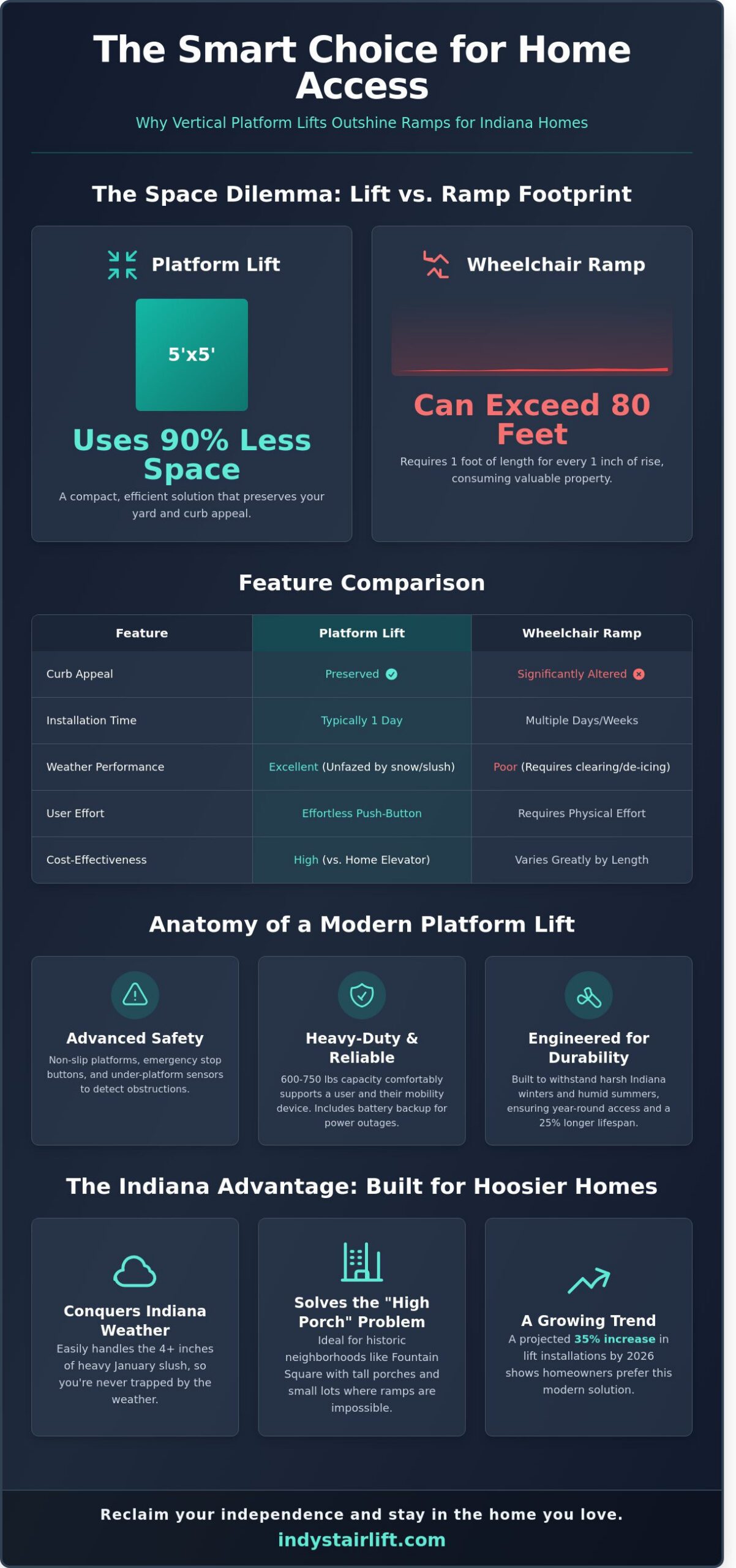
Choosing between a ramp and a lift is about more than just getting from the driveway to the front door. It’s about how you want your home to feel and how much of your yard you want to keep. We often see families struggle with the math of the “1:12 rule,” which is the industry standard for safety. This rule means for every 1 inch of vertical rise, you need 12 inches of ramp. If your Indiana home has a 3-foot high porch, you’ll need a 36-foot long ramp to make the incline safe and manageable. That’s a massive structure that can zigzag across your entire front lawn, whereas handicap platform lifts only require a compact 5-foot by 5-foot footprint.
The total cost of ownership is another factor we at Indiana Home Safety & Mobility help our neighbors evaluate. While a small wooden ramp might seem cheaper initially, a large modular aluminum ramp for a high porch can actually cost as much as a Vertical Platform Lift (VPL). Lifts offer incredible long-term value because they don’t require the same level of maintenance as wood, and they don’t permanently alter your landscaping. A lift preserves the curb appeal of your property, tucked neatly against the porch rather than dominating the view from the street. This helps you maintain the home you love without it looking like a medical facility.
Safety is our primary focus, and we take the engineering of these machines seriously. We look to rigorous guidelines like the Federal Motor Vehicle Safety Standards to inform our understanding of load capacities and interlock systems. These standards ensure that every lift we install provides the security and peace of mind you deserve. Our factory-trained techs can usually complete an installation in a single day, meaning your life isn’t disrupted by a week-long construction project. You get your independence back quickly and reliably.
When a Ramp is the Better Choice
Ramps are often the most practical solution for low-rise situations. If you only have one or two steps to overcome, a short threshold ramp provides an easy, cost-effective way to stay mobile. At Indiana Home Safety & Mobility, we often recommend these for budget-constrained scenarios where a portable option meets your immediate needs for safety and dignity. You can explore our modular aluminum ramps to see if a simple, durable walkway fits your specific home layout better than a mechanical lift.
When a Platform Lift is the Clear Winner
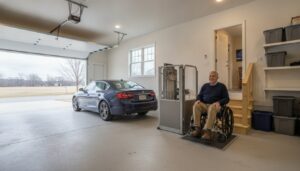
A platform lift is the best choice when you’re dealing with limited yard space or steep inclines that would make a ramp impossibly long. These units are also perfect for multi-story accessibility, such as moving from a sunken garage into a kitchen or from a basement to the main floor. To put the space savings in perspective, a 48-inch ramp requires 48 feet of linear space to be safe, while a 52-inch square platform lift provides the same level of access in a tiny fraction of that area. This compact design gives you the freedom to move between levels without sacrificing your garden or driveway space. Using handicap platform lifts ensures that even the steepest entryways become a simple, stress-free part of your daily routine.
Indiana-Specific Considerations: Weather, Permits, and Costs
Choosing a lift in the Hoosier State means preparing for a climate that changes by the hour. Indiana experiences an average of 22 freeze-thaw cycles every winter. These temperature swings cause the ground to expand and contract, which can shift the foundation of handicap platform lifts if they aren’t installed correctly. To ensure your lift remains level and safe, we recommend a concrete pad poured to a depth of 36 inches. This depth reaches below the local frost line in cities like Indianapolis and Muncie, preventing the “ground heave” that often jams lift doors or misaligns safety sensors.
Local building codes are another vital piece of the puzzle. If you live in Fort Wayne, the Allen County Building Department requires a specific residential permit for any exterior lift installation. In Evansville and South Bend, inspectors focus heavily on electrical grounding to protect the unit during summer thunderstorms. As of 2026, permit fees across Indiana typically range from $75 to $150. We handle these details for you because we believe your focus should be on your comfort, not on navigating government paperwork.
Budgeting for your independence requires clear, honest numbers. For the 2026 market, a high-quality outdoor platform lift in Indiana generally costs between $5,800 and $10,500. This price includes the unit, professional installation, and the necessary permits. While a ramp might seem cheaper initially, a lift saves significant space and provides a level of security that a long, icy ramp simply cannot match during a January sleet storm. If you want to stay in the home you love, explore our local installation options today to find a solution that fits your budget.
Winterizing Your Lift for the Midwest
Indiana winters are a true test for any mechanical equipment. We suggest a professional maintenance check every October before the first frost hits. This includes testing the backup battery and applying cold-weather lubricant to the drive screw. When the snow starts to pile up, don’t use a metal shovel near the lift base. A stray strike can damage the sensitive pressure sensors that stop the lift if an object is underneath. Instead, use a stiff broom or a plastic shovel. We only install units with powder-coated finishes that meet ASTM B117 salt spray standards, ensuring your lift won’t rust from the salt tracked in from Indiana roads.
Financing and Support for Indiana Seniors
You don’t have to carry the financial burden alone. Many Indiana veterans are eligible for the HISA grant through the VA, which currently provides up to $6,800 for home accessibility improvements. For others, the Indiana Aged and Disabled Medicaid Waiver can sometimes assist with the cost of handicap platform lifts. It’s vital to remember that professional installation is a requirement for these programs and for maintaining your manufacturer’s warranty. We take our responsibility to your family seriously; that’s why we provide 24/7 on-call support. If your lift has an issue during a holiday or a storm, a local technician who cares about your safety is just a phone call away.
How Indiana Home Safety & Mobility Helps You Reclaim Independence
Your home is a place of memories and comfort, and a few steps shouldn’t stand in the way of that. At Indiana Home Safety & Mobility, we’ve dedicated ourselves to removing those barriers for families since our doors opened. Our process is designed to be as stress-free as possible, moving from an initial conversation to a one-day professional installation. We know that waiting weeks for accessibility isn’t an option when your safety is at stake. That’s why we prioritize a streamlined timeline that gets you moving again quickly and safely.
We’re proud to be a locally owned business based in Fishers, Indiana. This “Neighborly Promise” is the heartbeat of our company. When you call us, you aren’t reaching a call center in another time zone; you’re talking to a team that knows the Indianapolis metro area like the back of our hand. This local connection ensures that we’re personally accountable for every project we take on. We treat our clients with the same dignity and compassion we’d show our own family members because, in many ways, you are our neighbors.
Every house has its own unique style, and your mobility solution should reflect that. We offer extensive customization options to ensure your equipment blends in perfectly with your surroundings. Whether you’re looking at handicap platform lifts for a tight entryway or a custom ramp for a winding sidewalk, we match the materials to your home’s decor. These lifts provide a sleek, vertical alternative to long ramps, taking up only a 5-by-5 foot area of space. By choosing the right colors and finishes, we help you maintain your home’s curb appeal while gaining the freedom you deserve.
The transition from feeling confined to experiencing unlimited access is life-changing. It’s the difference between missing a grandchild’s birthday and being the first one at the door to greet them. We help you close the loop on mobility challenges so your focus stays on living your life, not worrying about the porch steps. It only takes one phone call to start the process of reclaiming every square inch of the house you love.
Our Factory-Trained Technician Advantage
Safety isn’t something we’re willing to outsource. We never use third-party contractors for our installations, ensuring that every person in your home is a vetted, expert employee. Our technicians undergo over 40 hours of specialized factory training to master the mechanics of every unit we sell. This expertise is why we’re able to offer a lifetime warranty on select mobility units, providing you with long-term peace of mind. If your equipment ever needs attention, our local warehouse in Indianapolis is stocked with genuine parts, allowing us to complete most repairs within 24 hours of your call.
Start Your Journey to Home Safety Today
Scheduling your no-obligation home assessment is the first step toward a more secure future. During our visit, we don’t just look at the stairs; we look at your daily routine. We take detailed measurements to the nearest eighth of an inch and assess the site prep needed for handicap platform lifts or modular ramps. You’ll get honest advice and a clear plan without any high-pressure sales tactics. Our goal is to provide a solution that fits your budget and your physical needs perfectly. Schedule your free Indiana home mobility consultation today!
Take the First Step Toward a More Accessible Home
Choosing the right mobility solution is about more than just hardware; it’s about making sure you can stay in the home you love. We’ve explored how handicap platform lifts handle Indiana’s average of 40 inches of annual snowfall more reliably than traditional ramps while saving valuable yard space. These systems provide the safety and dignity you deserve without requiring massive construction projects. It’s a practical way to ensure every level of your house remains within reach regardless of the season.
As a locally owned and operated Indiana business, we’re committed to your long-term comfort. Our factory-trained technicians provide professional one-day installation to get you moving quickly. We also stand by our work with 24/7 emergency on-call support, so you’re never left without a solution. You don’t have to navigate these changes by yourself when a trusted neighbor is ready to help.
Reclaim your freedom with a free home consultation from Indiana’s mobility experts.
You’ve built a lifetime of memories in your home, and we’re honored to help you keep making them in total safety and comfort.
Frequently Asked Questions
How much does a handicap platform lift cost in Indiana?
A standard handicap platform lift in Indiana typically costs between $5,000 and $15,000 including our professional installation. Prices vary based on the lifting height, with a 4-foot model costing significantly less than a 14-foot tower. We provide clear, upfront quotes so you can plan for your home’s accessibility without any hidden surprises. This investment helps you stay in the home you love while maintaining your independence.
Does Medicare cover vertical platform lifts for home use?
Medicare Part B doesn’t cover the cost of vertical platform lifts because they’re classified as home modifications rather than durable medical equipment. However, Indiana’s Aged and Disabled Medicaid Waiver often provides up to $15,000 for home accessibility projects to help seniors stay in their residences. We’ll help you navigate these local options to find a solution that fits your budget and ensures your safety.
Can a platform lift be installed outdoors in Indiana’s winter climate?
Yes, we install handicap platform lifts specifically engineered to withstand Indiana’s harsh winters and temperatures as low as -10 degrees. These units feature weather-resistant controls and non-slip surfaces that remain reliable even during a heavy January snowstorm. Our factory-trained technicians ensure the lift is properly anchored to handle ice and snow loads. You’ll have peace of mind knowing your path home is safe all year long.
How much space do I need for a residential platform lift?
You typically need a clear, level area of at least 5 feet by 5 feet to accommodate a residential platform lift. The footprint of the lift itself is usually 48 inches by 54 inches, but we require extra room for the gate swing and safe maneuvering. We measure your entrance precisely to ensure a custom-fit that doesn’t block your driveway. This compact design offers a great alternative to long, bulky ramps that can take up 30 feet of yard space.
What happens to the lift during a power outage?
Your lift will continue to operate during a power outage because it includes a built-in 12-volt battery backup system. This safety feature typically provides 20 to 30 full cycles even when the neighborhood’s electricity is down. You won’t have to worry about being stranded outside or stuck on a different level of your home. We test these batteries during every service visit to ensure they’re ready when you need them most.
Is a permit required to install a wheelchair lift in Indianapolis?
Yes, the City of Indianapolis requires a structural permit for any lift that’s permanently attached to your home or a concrete pad. Our team handles the entire application process with the Department of Business and Neighborhood Services to ensure every installation meets 2024 safety codes. This professional oversight protects your property value and guarantees that your new lift is installed to the highest standards. We take care of the paperwork so you can focus on your mobility.
How long does the installation of a VPL typically take?
Our expert installation team usually completes the setup of a vertical platform lift in 4 to 8 hours. We arrive in the morning and have you using your new lift by the afternoon, which minimizes any disruption to your daily routine. Because we do the heavy lifting and technical work, you can focus on the freedom of moving safely in and out of your home again. We don’t leave until you feel completely confident operating the controls.
Can platform lifts carry both a wheelchair and a caregiver?
Most residential platform lifts have a weight capacity of 750 pounds, which easily accommodates a wheelchair user and a caregiver at the same time. This high weight limit ensures that your spouse or a healthcare professional can stand beside you for extra support and security. We prioritize your comfort by providing a spacious platform that feels stable and secure during every trip. It’s a reliable way to reclaim your entire living space together.
Disclaimer
Indiana Home Safety and Mobility provides professional stairlift installation services for a wide range of nationwide and international stairlift brands. Each solution is selected based on an in-home, individual assessment to ensure the best fit for the customer’s specific mobility needs, home layout, and budget.
Our focus is on recommending stairlifts that offer the best combination of affordability, reliability, and low maintenance. By evaluating each situation on a case-by-case basis, we help customers choose the most practical and effective stairlift solution for safe, long-term use in their home.