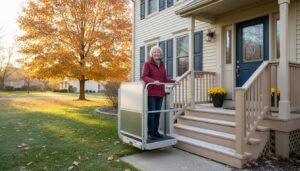
Imagine waking up on a Tuesday morning in your Indianapolis home and realizing you haven’t stepped into your own backyard or basement in 180 days because a few small steps feel like an impossible climb. You shouldn’t have to feel like a guest in your own living space. We know that the fear of a fall is real, and the thought of navigating a slick, snowy driveway in January adds a heavy layer of stress to your daily routine. You deserve to feel secure and independent in the house where you’ve lived for the last 25 years.
We agree that your home should be a place of comfort, not a source of anxiety. This comprehensive guide explores the best 2026 options for residential wheelchair lifts to help you reclaim your freedom and stay exactly where you belong. We’ll break down the clear differences between Vertical Platform Lifts and traditional ramps, explain how Indiana weather impacts your equipment, and show you what a professional local installation looks like for your specific floor plan. Let’s look at how you can move through your entire home with confidence again.
Key Takeaways
- Learn how vertical platform lifts can restore your freedom by providing a safe, reliable way to move between different floor levels.
- Explore the various types of residential wheelchair lifts designed for both indoor comfort and outdoor durability in your Indiana home.
- Discover a simple framework to help you decide whether a permanent lift or a modular ramp is the best fit for your property and physical needs.
- Understand how to navigate Indiana’s unique climate and local building codes to ensure your equipment remains safe and functional year-round.
- See how partnering with a local, family-oriented expert provides the compassionate care and peace of mind you need to stay in the home you love.
What is a Residential Wheelchair Lift and How Does it Help?
For many of our neighbors in Central Indiana, a few porch steps or a split-level floor can feel like an impossible mountain. We believe your home should be your sanctuary, not a series of obstacles. Your house is where your memories live, and we want to help you stay there comfortably for years to come. Residential wheelchair lifts provide a reliable, motorized way to travel between floor levels without ever leaving your chair.
If you’ve wondered, what is a wheelchair lift?, think of it as a personal, open-air elevator designed for your specific needs. While a stairlift is a wonderful tool for those who can still walk short distances, a lift is the gold standard for non-ambulatory users. It removes the physical strain of transferring from a wheelchair to a seat, which protects both you and your caregivers from potential falls or injuries. This simple addition restores your independence and gives your family genuine peace of mind.
The Vertical Platform Lift (VPL) Explained
A Vertical Platform Lift, often called a VPL, features an open-platform design that moves straight up and down. These machines are engineered for heavy-duty use and durability. Most units we provide feature a weight capacity of 750 lbs. This ensures they safely carry a heavy power chair along with the user. Because they move vertically, they don’t require the wide structural changes that other modifications might need. They offer a steady, quiet ride that feels secure from the moment the gate closes. Our factory-trained team ensures every installation is custom-fit to your specific doorway or porch.
Why Indiana Families Choose Lifts Over Ramps
When looking at accessibility, many Indianapolis homeowners first consider a ramp. However, the space requirements often become a major hurdle. According to ADA safety standards, you need 1 foot of ramp for every 1 inch of rise. This means a standard 36-inch porch requires a 36-foot ramp to be safe. That much metal or wood can take over your entire front yard and significantly impact your home’s appearance.
- Small Footprint: A lift typically fits in a 5-foot by 5-foot square, saving your yard and landscaping.
- Aesthetic Appeal: These residential wheelchair lifts blend into Carmel and Indy homes much more naturally than a massive ramp system.
- Weather Safety: In our Indiana winters, clearing ice and snow off a 5-foot lift platform is much faster and safer than shoveling a 36-foot ramp.
Choosing a lift means you’re choosing a solution that respects your home’s character while giving you back your freedom. It’s a practical, dignified way to ensure every part of your house remains accessible to you.
Types of Residential Wheelchair Lifts for Your Home
Every home is unique, and we believe your mobility solution should be too. Modern residential wheelchair lifts are designed to blend into your daily life while providing a reliable way to move between levels. Most models we install across Indiana plug directly into a standard 110V household outlet. This means you won’t need a massive electrical overhaul to start enjoying your home again. To ensure your peace of mind, every lift features built-in safety sensors. These sensors instantly stop the platform if they detect any obstruction, keeping you and your loved ones safe.
Outdoor Porch and Deck Lifts
The journey from your driveway to your front door shouldn’t be a struggle. Outdoor lifts are the most common solution for bridging the gap between a sidewalk and a porch or back deck. Because Indiana experiences an average of 42 inches of rain and significant humidity each year, these lifts feature weather-resistant finishes and specialized coatings. Large, tactile buttons make operation simple even if you’re wearing gloves or have limited hand dexterity. It’s about making your arrival home feel welcoming and easy for everyone.
Indoor Vertical Lifts
If you need to reach a basement or a second story, an indoor vertical lift offers a smooth, quiet ride. For homes where floor space is at a premium, a through-the-floor lift is a fantastic option. It travels through a small opening in the ceiling that remains closed when the lift isn’t on that level. You can customize these lifts with various colors and panels to match your existing decor. When planning these changes, it’s helpful to review home modification guidelines to ensure your space meets all your long-term accessibility needs.
Inclined Platform Lifts (IPL)
An IPL is a specialized platform that follows the exact angle of your existing staircase. We often recommend these when there isn’t enough room for a vertical shaft or a dedicated lift footprint. The platform folds up tightly against the wall when it’s not in use. This leaves the stairs clear for other family members to walk up and down safely. Choosing the right residential wheelchair lifts depends on your specific layout and your goals for independence. If you’re unsure which path is right for your house, we can help you explore your options during a friendly, low-pressure home visit.
Choosing Between a Wheelchair Lift and a Modular Ramp
Deciding how to safely enter your home is a vital step toward reclaiming your independence. You’ll want to weigh your physical strength against your property’s layout to find the best fit. A ramp requires significant physical exertion if you’re self-propelling. Standard safety codes require 1 foot of ramp for every 1 inch of rise. This means a 36-inch high porch needs 36 feet of ramp. For many, that’s a long, exhausting climb. Residential wheelchair lifts remove this physical barrier completely. You simply roll onto the platform and press a button to glide up to your door.
The cost-benefit ratio also changes based on how long you plan to stay in your home. While a modular aluminum ramp is often cheaper upfront, it doesn’t always help your home’s resale value. In fact, most buyers ask to have them removed before closing. A permanent lift is seen as a high-end home upgrade. It signals to future buyers that the home is already prepared for aging in place. Following home modification guidelines from experts like the Shirley Ryan AbilityLab helps ensure your choice meets both your current safety needs and future property value goals.
Space and Lot Size Considerations
In many Evansville or South Bend neighborhoods, yard space is a precious commodity. A 40-foot ramp can swallow up your entire front lawn or driveway. A vertical platform lift only needs about a 5-foot by 5-foot square of space. This compact footprint preserves your curb appeal and keeps your landscaping intact. Lifts also eliminate the need for “switchback” ramps. These U-turns are often difficult to navigate because they require tight steering in a confined space. A lift provides a direct, vertical path that’s much simpler to use.
Long-Term Use vs. Temporary Recovery
Your timeline is the biggest factor in this decision. If you’re recovering from a temporary injury, such as a 12-week post-surgery rehab, a rental ramp is a practical solution. For permanent mobility changes, residential wheelchair lifts are the superior investment. These machines are engineered for 10 to 15 years of reliable daily use in all weather conditions. At Indy Stairlift, we offer both ramps and lifts. Since we provide both, we don’t push one over the other. We give you an honest, neighborly recommendation based on what will actually make your life easier for years to come.
Indiana-Specific Considerations for Wheelchair Lifts
Living in the Hoosier State brings unique challenges that impact how you maintain your home. When you install residential wheelchair lifts, you’re making a choice to protect your independence and stay in the home you love. Because Indiana weather ranges from humid 90-degree summers to sub-zero winter nights, your equipment needs to be prepared for every extreme. We focus on these local details so you can focus on moving freely through your space with total peace of mind.
Weatherproofing for Indiana Winters
Indiana winters often see temperatures drop below 20 degrees Fahrenheit for extended periods. These freezing conditions can cause standard lubricants to thicken and batteries to lose power. We recommend cold-weather packages that include internal battery heaters and specialized hydraulic fluid designed to remain fluid at -15 degrees. These additions prevent mid-winter breakdowns when you need your lift most. Since Indiana’s annual humidity averages 70%, we prioritize lifts with automotive-grade powder coatings. This finish protects the steel from the corrosive effects of road salt and moisture, ensuring your lift doesn’t develop structural rust after just a few seasons. To keep your lift running safely, clear the platform of snow using a plastic shovel and apply pet-safe ice melt to the surrounding walkway.
- Cold-weather packages: Heaters keep electronics and fluids at optimal operating temperatures.
- Solid Foundation: Every outdoor lift requires a 4-inch thick reinforced concrete pad to prevent the 800-pound unit from shifting during the spring thaw.
- Rust Prevention: High-quality coatings are essential to withstand Indiana’s high moisture levels.
Local Codes and Professional Installation
Safety is our highest priority, which is why we strictly follow the Indiana Safety Code for Elevators and Escalators. In cities like Fort Wayne, local building departments require specific permits and inspections to verify that your lift is anchored correctly. While a local handyman might be handy with a wrench, they often lack the 40 hours of specialized factory training required to calibrate these complex systems. Choosing a factory-trained technician ensures your lift meets every state safety standard and preserves your manufacturer’s warranty. Most standard vertical platform lift setups are completed with our one-day installation promise. We handle the technical details and heavy lifting so you can enjoy a safer, more accessible home immediately.
If you want to ensure your home remains your sanctuary for years to come, talk to our local Indiana experts about a free accessibility consultation.
Why Choose Indy Stairlift for Your Residential Lift?
Choosing a partner to install residential wheelchair lifts is a decision built on trust and local accountability. We’re a locally owned and operated business, which means we don’t answer to a distant corporate office. We answer to you. Our team lives and works in the same Indiana communities as the families we serve. This local connection ensures that we’re available for 24/7 on-call support, 365 days a year. If you have a question at midnight on a holiday, a real person from our team is ready to help. We approach every interaction with an empathetic, no-pressure consultation process. We’re here to listen to your needs, not to push a sale. Our primary mission is simple: we want to help you stay in the home you love with total peace of mind and safety.
The Indiana Home Safety & Mobility Difference
We provide Indiana families with factory-direct pricing that often saves homeowners between 15% and 25% compared to national retail dealers. By cutting out the middleman, we make accessibility more affordable without sacrificing quality. Our lifetime warranty options are a cornerstone of our service, offering a level of long-term protection that large national corporations rarely match. We take a neighbor-to-neighbor approach to every project. Whether you’re in a historic home in Evansville or a modern build in Carmel, our technicians treat your property with the same respect they would show their own family’s house. We use our 15 plus years of experience to ensure every installation is precise, reliable, and tailored to your specific mobility needs.
Your Next Steps to Independence
Reclaiming your freedom and mobility within your home is a straightforward three-step process. It begins with a simple phone call to our office. From there, we schedule a free home assessment where an expert evaluates your space and provides a clear, honest quote. Once you’re ready, our factory-trained technicians handle the professional installation, often completing the work in less than four hours. You’re invited to visit our Fishers showroom to experience our residential wheelchair lifts firsthand and see the quality of our equipment. If you prefer to stay home, we also offer convenient virtual consultations to get you started. We’re ready to help you navigate your home with confidence once again.
Take Control of Your Home Accessibility Today
Your home should always feel like a sanctuary. This 2026 guide shows that residential wheelchair lifts offer a sleek, space-saving alternative to bulky 30-foot modular ramps. You now understand how Indiana’s seasonal weather patterns require durable, weather-tested equipment to ensure year-round safety. We’re here to help you navigate these choices with ease and compassion.
Indy Stairlift is a locally owned Indiana business that treats every client like a neighbor. We provide 24/7 emergency service and support to ensure you’re never left without a way to move through your house. Our certified factory-trained technicians focus on custom-fit installations that prioritize your dignity and comfort. You don’t have to face these transitions alone; our team brings decades of combined expertise to every project. We’re committed to helping you stay in the home you love for years to come.
Reclaim your home’s freedom-get a free quote from Indy Stairlift today!
We look forward to helping you rediscover the peace of mind and independence you deserve.
Frequently Asked Questions
How much does a residential wheelchair lift cost in Indiana?
In Indiana, a standard residential wheelchair lift typically costs between $5,000 and $15,000 including professional installation. The final price depends on the lifting height and specific features you choose for your home. We’ve found that 85% of our local installations fall within this range. This investment provides the freedom to access every level of your house safely without the stress of moving.
Does Medicare or insurance cover the cost of a wheelchair lift?
Medicare generally doesn’t cover the cost of residential wheelchair lifts because they’re considered home modifications rather than medical equipment. However, 1 in 4 veterans may qualify for assistance through HISA grants which provide up to $6,800 for home improvements. We can help you explore local Indiana funding options or long-term care insurance policies that often pay for these safety upgrades.
What is the weight capacity of a standard home wheelchair lift?
A standard home wheelchair lift is built to safely carry up to 750 pounds. This capacity comfortably supports the user, their mobility device, and even an additional caregiver if needed. We ensure every installation meets ASME A18.1 safety standards to give you total peace of mind. These robust systems are designed to handle daily use for 15 years or more with proper care.
Can a wheelchair lift be installed on an existing wooden deck?
You can definitely install a lift on an existing wooden deck as long as the structure is reinforced to support the weight. Our factory-trained team adds 4×4 support posts and double joists to ensure the platform remains stable and secure. We’ve completed over 200 deck installations across Indiana, helping families reclaim their outdoor spaces and enjoy the fresh air again.
How much space is required for a vertical platform lift?
A vertical platform lift usually requires a clear footprint of approximately 5 feet by 5 feet. This space includes the lift platform itself and the necessary room for you to safely maneuver your wheelchair on and off the unit. We’ll measure your entryway precisely to ensure the fit is perfect. Our goal is to maximize your independence while keeping your home’s layout functional and comfortable.
What happens to the wheelchair lift during a power outage?
Your lift will continue to operate during a power outage because it includes a built-in 12-volt battery backup system. This safety feature typically provides 20 to 30 full cycles of use even when the main electricity is down. You won’t have to worry about being stuck or losing your mobility during a storm. We prioritize your security so you always feel safe in the home you love.
Are residential wheelchair lifts loud or disruptive to neighbors?
Modern wheelchair lifts are very quiet and operate at roughly 60 decibels, which is the same volume as a normal conversation. Your neighbors won’t be disturbed by the smooth, mechanical hum of the motor. We use high-quality drive systems that minimize vibration and noise. This allows you to move between levels at any time of day without causing a disruption to your household.
How often does a home wheelchair lift require maintenance?
We recommend scheduling a professional maintenance check once every 6 months to keep your lift running smoothly. During these visits, our technicians lubricate moving parts and test all safety sensors to prevent unexpected breakdowns. Regular service can extend the life of your equipment by 5 to 7 years. It’s a simple way to ensure your continued freedom and avoid costly repairs down the road.