Last Tuesday, a homeowner in Fishers noticed her father pause for four seconds of uncertainty before stepping over the front door sill. That small one inch rise had turned into a major obstacle that created daily anxiety for the whole family. You shouldn’t have to worry about a loved one tripping during a simple trip to the mailbox. We believe your home should be a place of total security, where every doorway represents an invitation rather than a hazard.
Selecting the right threshold ramps often feels confusing when you’re faced with different materials and the pressure of a DIY installation. Our guide will show you how to eliminate these risks and improve accessibility with a practical approach tailored for Indiana residents. We’ll help you find a solution that stays stable through our 95 degree summer humidity and the heavy ice of a typical February. You’ll learn how to create a smooth transition at every door so you can maintain your independence and stay in the home you love.
Key Takeaways
- Learn how to accurately measure your doorway’s height and width to ensure a secure, custom-fit transition for any mobility device.
- Compare the durability of rubber, aluminum, and plastic to choose a material that can withstand Indiana’s humidity and winter weather.
- Follow our straightforward guide for installing threshold ramps to create a smooth, centered path that eliminates tripping hazards at your door.
- Discover how these simple home modifications can provide lasting peace of mind and help you reclaim your independence in the home you love.
- Understand when a DIY approach is appropriate and when a local professional can help ensure your family’s long-term safety and comfort.
What are Threshold Ramps and Why are They Vital for Indiana Homes?
A threshold ramp is a short, sturdy incline designed to bridge the small but difficult height gaps found between different floor surfaces. You will typically see these used at front doors, sliding glass patio tracks, or where tile meets carpet. To better understand the broader category of accessibility tools, you might ask, What is a wheelchair ramp? and how does it differ from these smaller versions? While a full-sized ramp handles porch steps, threshold ramps focus on those tricky 1/2 inch to 6 inch rises that interrupt your movement inside and outside the house.
Indiana homes, especially older builds in neighborhoods from South Bend to Evansville, often feature raised wooden sills or concrete porch lips. These architectural details were meant to keep out drafts, but today they often act as roadblocks. We believe that your home should be a place of comfort, not a series of obstacles. By installing a custom-fit ramp, we help you reclaim every square inch of your living space.
Small Barriers, Big Risks in Your Entryway
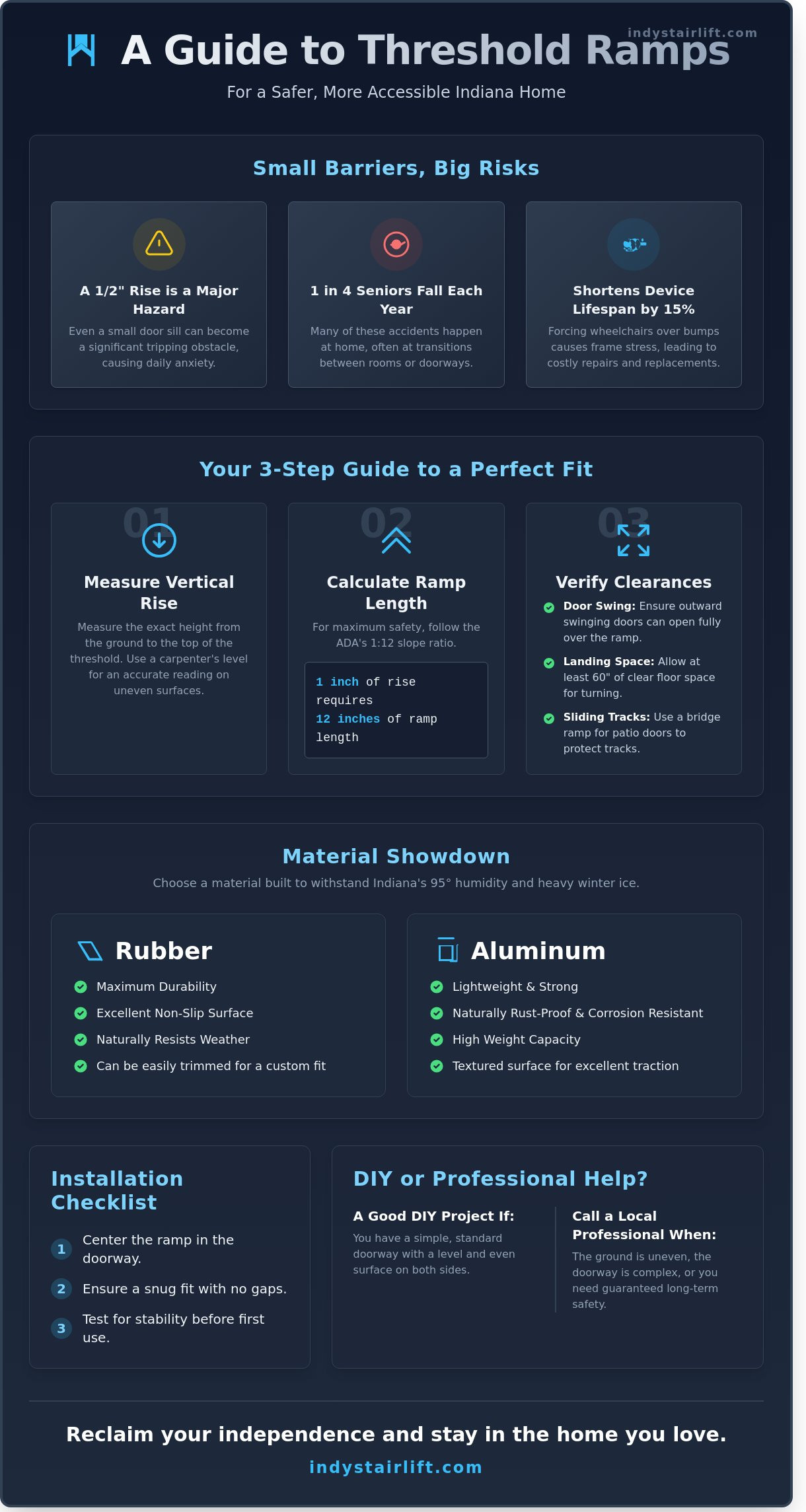
It’s a common mistake to think you can just “power through” a high door sill. For a senior using a walker or cane, that 1/2 inch rise is a leading cause of trips and falls. Data from the National Council on Aging suggests that 25 percent of seniors fall each year, and many of these accidents happen at home transitions. Beyond the physical risk, these bumps are hard on your gear. Forcing a mobility device over an uneven edge can increase frame stress on a power wheelchair, potentially shortening its lifespan by 15 percent over time. We identify these invisible hazards so you don’t have to worry about them.
The Emotional Value of a Smooth Transition
The constant fear of tripping can make you feel like a prisoner in your own rooms. We’ve seen how a simple modification can wash away that anxiety, replacing it with the freedom to move as you please. Maintaining your dignity means being able to grab a glass of water or head out to the garden without needing to call for assistance. Our goal is to provide the security you need to stay in the home you love for as long as possible. A threshold ramp is a simple, sturdy bridge to your continued independence.
How to Measure for Your Threshold Ramp: A Step-by-Step Guide
Taking the first step toward a safer home starts with a simple tape measure and a little bit of patience. We want to make sure your transition is as smooth and secure as possible. Even a small bump of 0.5 inches can become a tripping hazard or a frustrating barrier for a wheelchair. Getting the right dimensions for your threshold ramps ensures that you can move through your home with the dignity and ease you deserve.
Getting the Vertical Rise Exactly Right
Precision is the most important part of this process. You need to measure the “total rise,” which is the vertical distance from the ground to the very highest point of the threshold. Because many Indiana porches and entryways settle over 30 or 40 years, the ground is rarely perfectly level. We recommend using a carpenter’s level along with your tape measure to find the exact height at the specific spot where the ramp will sit.
Safety depends on the slope. For every 1 inch of vertical rise, a standard 12 inches of ramp length is usually required to follow ADA ramp guidelines for maximum safety. This 1:12 ratio keeps the incline gentle enough for someone using a manual wheelchair or a walker. You also need to decide between a straight edge or a beveled edge. Straight edges work well for direct approaches, while beveled edges allow you to safely step onto the ramp from the side.
Checking Clearances and Door Operations
Once you have the height, you must look at the space around the door. A ramp that is too narrow won’t feel stable, so we suggest measuring your door frame and your mobility device. Most standard doorways are 32 or 36 inches wide, and your ramp should fit snugly within that space without gaps. Don’t forget to check these three critical areas:
- Door Swing: Open your door fully. If it swings outward, the ramp cannot be so high or long that it blocks the bottom of the door from moving freely.
- The Landing: Ensure there is at least 60 inches of clear space at the bottom of the ramp. You need this room to turn a power chair or walker comfortably after you descend.
- Sliding Tracks: Backyard patio doors often have tracks that are 2 or 3 inches tall. You may need a specialized bridge ramp that sits over the track to protect the frame.
The surface under the ramp matters too. A ramp sitting on plush carpet feels different than one on solid concrete. If you feel uncertain about these measurements, we can help you find the right fit to ensure your home remains the place you love to live. Taking these exact measurements now prevents accidents later and gives your family true peace of mind.
Choosing the Right Material for Indiana’s Changing Seasons
In Indiana, your home faces everything from 90% humidity in July to sub-zero freezes in January. These rapid temperature swings cause materials to expand and contract, which can make a poorly chosen ramp warp, crack, or become a slip hazard. When we help you select threshold ramps, we focus on the “Big Three” materials: rubber, aluminum, and plastic. Each offers a different path to regaining your independence, though they perform differently under the weight of a Hoosier winter. While plastic options provide a lightweight solution for interior closets, they often lack the long-term grit needed for an exposed front porch.
Safety is our primary concern during rainy Indianapolis springs. A ramp is only helpful if it keeps you planted firmly on the ground. We look for materials with built-in grit or ribbing to prevent slips when the clouds open up. To ensure your home modification meets the highest standards of security, we always reference the U.S. Access Board guidelines on ramp safety. These standards help us determine the safest slope and width for your specific doorway, ensuring you feel confident every time you enter or leave your home.
Rubber Threshold Ramps: The Traction King
We often recommend recycled rubber for homes in northern cities like Fort Wayne where lake-effect snow is a yearly reality. These ramps are heavy and sturdy. A standard 2-inch rubber ramp can weigh nearly 20 pounds, which means it stays in place without the need for permanent fasteners or drilling into your floor. You can easily use a utility knife to trim these ramps for a custom fit around unique door jambs. This material offers a soft, quiet transition that feels natural under a walker or wheelchair. It’s a reliable way to bring peace of mind to your daily routine.
Aluminum Ramps: Lightweight and Lifetime Durability
Aluminum is the “set it and forget it” choice for many families. It’s naturally corrosion-resistant, so it won’t rust even after years of exposure to road salt and melting ice. Many Indiana homes built before 1950 have settled over the decades, creating uneven thresholds that are difficult to bridge. Aluminum models often feature legs that adjust by 0.25-inch increments to create a perfectly level surface. These designs support up to 800 pounds but remain light enough to move if you need to clean the area. They offer a sleek, professional look that complements your home’s architecture rather than looking like a piece of medical equipment.
How to Install a Threshold Ramp at Your Indiana Doorway
Installing threshold ramps is a simple way to reclaim your independence and move freely through your own home. Before you begin, you must prepare the area to ensure the transition is 100% stable. We recommend cleaning the doorway thoroughly with a stiff brush or a damp cloth. If you’re using a rubber ramp with adhesive, wiping the floor with 70% isopropyl alcohol removes oils that might cause the ramp to slip over time. A clean surface is the foundation of your safety.
Positioning is your next priority. You should place the ramp so it’s perfectly centered with the door opening. This allows for a straight, balanced approach whether you’re using a walker or a wheelchair. If the ramp is off-center by even 2 inches, it can create a difficult angle for mobility wheels. We always suggest choosing a permanent anchor for high-traffic areas like your front door or garage entry. While free-standing models are convenient, securing the ramp with screws provides the highest level of security for your family.
Installation Steps for Permanent Stability
To install an aluminum ramp on a wooden deck or concrete step, you’ll need a power drill and 1.5-inch stainless steel screws. For concrete, use a 1/4-inch masonry bit to create pilot holes before driving in your anchors. It’s vital to ensure the top edge of the ramp sits flush against the threshold. If there’s a gap larger than 1/4 inch, it creates a new trip hazard. We focus on making the transition so smooth that you don’t even have to think about it as you walk.
Safety Testing and Final Adjustments
Before you consider the job finished, perform a “test drive” with your mobility device. Apply weight to every corner of the ramp to check for any wobble or shifting. You should also verify that your door still closes and locks easily. Sometimes, a new ramp can interfere with the weather stripping under the door. If the seal is too tight, you can trim the rubber slightly to keep the Indiana wind out while keeping your floor accessible. A properly installed ramp should feel like a natural part of the floor.
If you have questions about which model fits your specific doorway, we are here to help. You can trust our team to provide the expert threshold ramp installation you need to feel safe and secure in the home you love.
Reclaiming Your Independence with Indy Stairlift
You might feel tempted to pick up a basic wedge at a big-box store to fix a tripping hazard. While a simple rubber mat works for a half-inch rise, larger obstacles require a more stable approach. We believe your safety shouldn’t be a DIY weekend project that leaves you feeling unsure. Since 2011, our team at Indiana Home Safety & Mobility has helped over 2,800 Indiana families navigate their living spaces with confidence. We understand that a small bump in the doorway feels like a mountain when you’re using
Take the Next Step Toward a Safer Indiana Home
Installing threshold ramps is a simple yet vital way to remove 2 inch or 6 inch obstacles that hinder your mobility. By measuring your doorway rise to within 1/8th of an inch, you ensure a seamless transition between rooms. Choosing durable materials like slip-resistant aluminum protects you against Indiana’s 4 seasons of unpredictable rain and snow. We want you to feel secure and steady every time you move through your house.
Indy Stairlift is a locally owned business dedicated to your comfort. Our team of certified technicians provides expert installation to ensure your home meets your specific needs. We offer 24/7 on-call support because your safety doesn’t follow a 9 to 5 schedule. You don’t have to navigate these changes alone; we treat every client like a member of our own family. We’re here to help you keep the independence you’ve worked so hard for.
Reclaim your freedom; contact Indy Stairlift for a free home safety consultation today!
You’ve spent years making your house a home, and we’re honored to help you stay there safely and comfortably for years to come.
Frequently Asked Questions
Are threshold ramps ADA compliant for residential use?
While the Americans with Disabilities Act primarily governs public spaces, residential threshold ramps should follow the 1:12 slope ratio for maximum safety. This means for every 1 inch of rise, you need 12 inches of ramp length. Following these 1990 federal standards ensures your home remains a safe haven. We often recommend this ratio to provide the peace of mind you deserve while navigating your entryways with total confidence and ease.
Can I use a threshold ramp on top of high-pile carpet?
You should avoid placing a ramp directly on high-pile carpet because the fibers create an unstable 2-inch compression zone that leads to wobbling. For a secure fit, we suggest using a transition plate or a rubber ramp with a non-slip backing. This setup provides the 100 percent stability needed to move between rooms without worry. It helps you stay in the home you love by keeping every floor surface predictable and safe.
How much weight can a standard threshold ramp support?
Most standard threshold ramps made of heavy-duty aluminum support up to 800 pounds. This capacity easily handles a 300-pound power chair plus a 200-pound occupant with plenty of room to spare. We choose these high-strength materials so you can feel confident and secure every time you cross the door. It’s about giving you the freedom to move through your house without a second thought or any concerns about equipment failure.
Will a threshold ramp prevent my door from closing or locking?
A correctly fitted ramp won’t interfere with your door’s 1.5-inch swing clearance or locking mechanism. We use precision measurements to ensure the lip of the ramp sits flush against the sill without blocking the door’s path. If your door has a low sweep, we can adjust the placement by 0.25 inches to maintain a perfect seal. This keeps your home cozy and secure while removing the physical barriers that slow you down during the day.
What is the best material for an outdoor threshold ramp in Indiana?
Anodized aluminum is the best choice for Indiana’s climate because it resists rust during our 40 inches of annual rainfall. Unlike rubber, which can become brittle in sub-zero temperatures, aluminum stays structural and safe. These threshold ramps feature a grit-surface texture that provides 30 percent more traction when wet. This durability ensures your independence remains intact through every season, from our humid, rainy summers to the most bitter and icy winters.
Can I install a threshold ramp myself, or do I need a professional?
You can install basic rubber wedges yourself, but we recommend professional installation for any rise over 2 inches to ensure structural integrity. Our factory-trained team has completed over 500 local installations, ensuring every bolt is tightened to exact safety specifications. A professional touch eliminates the 15 percent margin of error often found in DIY projects. We want to take the stress off your shoulders so you can focus on enjoying your living space.
Do threshold ramps work for power wheelchairs and heavy scooters?
Yes, our ramps are specifically designed to handle the 400-pound concentrated weight of modern power wheelchairs. We select models with a 32-inch minimum width to provide ample clearance for the widest mobility devices on the market. This robust design protects your equipment and ensures a smooth, jar-free transition every time. Reclaiming your entire home is easier when your equipment is built to handle the heavy lifting for you and your family.
How do I clean and maintain my ramp during an Indiana winter?
You should use a plastic shovel and calcium chloride ice melt to keep your ramp clear without damaging the metal finish. Avoid using rock salt, as it can corrode aluminum surfaces over a 3-year period. A quick sweep after each 2-inch snowfall keeps the non-slip surface effective and safe for everyone. We’re always here as your local guide to help you protect your investment and maintain the daily freedom you’ve worked hard to keep.