What if the staircase that leads to your bedroom didn’t feel like an impossible mountain to climb every evening? For many of us, getting upstairs with bad knees has turned a simple daily routine into a source of sharp pain and genuine anxiety. Approximately 25% of adults in the United States report experiencing frequent knee pain, so you’re certainly not alone in this struggle. You’ve likely felt that familiar sting in your joints or the unsettling fear that your balance might give way. It’s frustrating to feel like a prisoner on the ground floor of your own home. You shouldn’t have to choose between your comfort and your safety.
We’re here to show you that you don’t have to move to a one-story house to reclaim your independence. You’ll discover the best physical techniques, smart home modifications, and specialized mobility tools designed to help you navigate your home without pain or the risk of a fall. This guide explores everything from simple climbing methods to professional solutions like stairlifts to help you make your entire house accessible again.
Key Takeaways
- Understand the specific biomechanics of stair climbing to help you move with more confidence and less joint strain.
- Learn the “step-to” technique for getting upstairs with bad knees, a simple method that significantly reduces the load on your joints.
- Identify quick home modifications, such as enhanced lighting and non-slip treads, that provide immediate security for every step.
- Explore how modern mobility tools like stairlifts can help you stay in the home you love without the fear of falling.
- Discover the benefits of a professional home assessment to ensure your space is perfectly tailored to your unique physical needs.
Table of Contents
Why Climbing Stairs is So Hard on Your Knees
If you’ve ever stood at the bottom of your staircase and felt a wave of hesitation, you aren’t alone. That feeling of “stair dread” is a natural response to the sharp, localized pain that often comes with every step. For many homeowners, getting upstairs with bad knees feels like an athletic feat rather than a simple part of their day. It’s a frustrating shift that can make you feel like a guest in your own home, restricted to the ground floor and cut off from your bedroom or bathroom.
The reason stairs feel so much harder than a walk in the park comes down to basic physics. When you walk on flat ground, your knees act as stable hinges. However, the moment you begin to climb, your patellofemoral joint, the area where your kneecap meets your thigh bone, has to work overtime. This joint acts as a pulley system. On a staircase, it must handle the full weight of your body while bent at a steep angle. Over time, the natural cushioning in our joints can wear thin, making this mechanical process feel like bone rubbing on bone.
The Impact of Gravity and Force
The pressure on your joints changes dramatically the moment you lift your foot toward the next tread. Clinical studies suggest that climbing a standard flight of stairs can put a force equal to three to six times your total body weight directly onto your knee. If you weigh 150 pounds, your knees might be managing nearly 900 pounds of pressure with every single step. This is why muscle fatigue sets in so quickly. When your quadriceps and calves get tired, they can’t support the joint as effectively, which increases the risk of a stumble or a painful misstep.
Interestingly, many people find that going down the stairs is even more painful than going up. This happens because your muscles have to work “eccentrically,” acting as brakes to control your descent against gravity. This controlled lowering puts a unique type of stress on the tendons and cartilage that flat-ground walking simply doesn’t replicate.
Common Conditions That Make Stairs Difficult
Several specific health factors can turn a staircase into a significant barrier. The most common culprit is Osteoarthritis, which involves the gradual breakdown of the protective cartilage that allows your joints to glide smoothly. Without that “shock absorber,” the friction leads to inflammation and stiffness. Other common issues include:
- Meniscus Tears: These small rips in the knee’s cartilage can cause a “locking” or “catching” sensation that feels particularly unstable on steps.
- Muscle Imbalances: If your hamstrings are much stronger than your quadriceps, or vice versa, your kneecap may not “track” properly in its groove, causing pain during deep bends.
- Bursitis: Inflammation of the small, fluid-filled sacs that cushion the joint can make any pressure on the knee feel unbearable.
Understanding these physical hurdles is the first step toward reclaiming your space. While the biology of getting upstairs with bad knees is complex, there are several practical techniques and home solutions that can help you move with confidence again.
The Best Techniques for Getting Upstairs with Bad Knees
Learning the right way to move can change your relationship with your home. When you’re struggling with getting upstairs with bad knees, your movement needs to shift from automatic to intentional. Most of us grew up using the “step-over-step” method, where we alternate feet on every tread. While this is fast, it’s also the most taxing on your joints. Instead, try shifting to a “step-to” method. This involves bringing both feet onto the same step before moving to the next one. It creates a much more stable base and feels significantly more secure. It may feel slower at first, but it protects your knees from the high-impact forces that cause sharp pain.
Think of your staircase as a path that requires a new strategy. By focusing on your foot placement and the way you distribute your weight, you can reduce the strain on your patellofemoral joint. Always aim to place your entire foot firmly on each tread rather than just the ball of your foot. This larger surface area provides better leverage and prevents your calf muscles from tiring out, which is often when missteps happen.
The “Good Leg Up, Bad Leg Down” Rule
This is the golden rule of mobility that every physical therapist recommends. When you’re heading up the stairs, lead with your stronger leg. Your “good” leg does the heavy lifting, pulling your body weight upward while the painful leg follows to meet it on the same step. When you’re ready to head back down, reverse the process and lead with the weaker leg. This ensures the stronger leg is the one controlling your weight as you lower yourself. This technique is especially helpful for those managing chronic conditions like Knee osteoarthritis, as it minimizes direct pressure on the most sensitive parts of the joint. Visualizing this weight shift before you start can help you maintain your balance and stay calm.
Using Handrails Effectively
Don’t just hold the rail for balance; use it as a tool to offload your weight. A two-hand grip, where one hand is slightly ahead of the other, allows you to pull yourself up rather than just pushing off your knees. This shifts a portion of the workload to your upper body and core. If your home only has one rail, try to stay close to the wall on the opposite side for extra stability. If you find yourself relying so heavily on these rails that your arms are getting sore, it might be a sign to get your free same-day estimate. Seeing how a professional solution can take the weight off your joints entirely can provide immense peace of mind.
Taking your time while getting upstairs with bad knees ensures you stay in control of every movement. Rushing is often the primary cause of accidents, as it leads to shallow breathing and muscle tension. Take a deep breath before you begin your climb and pace yourself. Pausing for a few seconds halfway up isn’t a sign of weakness; it’s a smart way to let your muscles recover so you can finish the climb safely and without extra pain.
Immediate Home Modifications to Improve Stair Safety
While learning new physical techniques is a vital first step, your home’s environment shouldn’t be working against you. Making a few immediate adjustments to your staircase can significantly lower the mental and physical stress of getting upstairs with bad knees. These changes don’t have to be major renovations to be effective. Often, it’s the small, thoughtful details that provide the most relief and security, turning a daunting climb into a manageable part of your day.
Beyond just the physical act of climbing, experts at the Arthritis Foundation emphasize that using safe stair-climbing techniques works best when your environment is optimized for stability. This means looking at your stairs with a fresh set of eyes to spot potential hazards you might’ve ignored for years. Adapting your home to your body’s needs is a powerful way to reclaim your independence without the constant fear of a fall.
Lighting and Visibility
Good visibility is your first line of defense. If your staircase has dark corners or uneven lighting, it’s easy to misjudge the depth of a step, which leads to jarring impacts on your joints. Installing motion-activated LED strip lights under each tread or along the baseboard ensures you always have a clear view without fumbling for a switch. You should also check that your landings are shadow-free. Shadows can hide small objects or create the illusion of a level surface where there isn’t one. For an extra layer of safety, consider adding high-contrast tape to the edge of each step. This simple addition helps your eyes quickly identify where one tread ends and the next begins, which is especially helpful during evening hours.
Traction and Surface Grip
The surface of your stairs matters just as much as the lighting. Wooden or tile steps can be incredibly slick, especially if you’re wearing socks. In fact, “sock-only” walking is one of the biggest risk factors for household slips. Clear, anti-slip adhesive strips are an affordable way to add traction without hiding the beauty of your wood. If you have carpeted stairs, keep an eye on your runners. Worn-out or loose carpeting can easily catch a toe and lead to a trip.
Don’t forget the importance of a balanced grip. Most homes only have a handrail on one side, but adding a second rail provides much better weight distribution. This allows you to use both arms to support your weight, taking even more pressure off your knees. Finally, make it a habit to clear the “clutter zone” at the top and bottom of your flight. Shoes, bags, or mail left on the landing are trip hazards you shouldn’t have to navigate. If these small changes still leave you feeling uneasy, you can get your free same-day estimate to explore more permanent safety options that offer total peace of mind.
Long-Term Solutions: When Techniques Aren’t Enough
There often comes a moment when the best physical techniques and simple home adjustments reach their limit. You might recognize this as the “tipping point.” It’s that day you realize you’ve been avoiding the second floor entirely, or you’re planning your whole day around only making one trip up the stairs. When getting upstairs with bad knees becomes a source of genuine dread rather than just a minor inconvenience, it’s time to look at solutions that adapt your home to your needs. Reclaiming your entire living space isn’t just about convenience; it’s about your personal dignity and the freedom to enjoy every room you’ve worked so hard to maintain.
Many homeowners feel a bit of hesitation when considering mobility tools, fearing they might look “clinical” or signal a loss of independence. In reality, these tools are instruments of liberation. They allow you to stay in the neighborhood you love and the home where your memories live. Instead of moving to a cramped one-story apartment, you’re simply upgrading your house to support your long-term comfort and security.
Straight vs. Curved Stairlifts
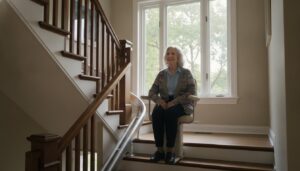
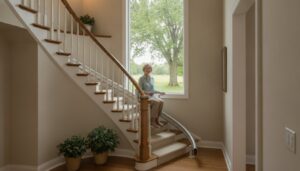
For most standard Indiana homes with a single, direct flight of steps, straight stairlifts are the most practical answer. These systems are incredibly reliable and are designed to fold up neatly when not in use, keeping the walkway clear for other family members. Because they use a standardized rail, our team can often provide a one-day installation, giving you immediate relief from the pain of climbing. If your staircase has a landing, a 90-degree turn, or a graceful curve, a custom curved stairlift is the way to go. These are precision-engineered to follow the exact contour of your wall, ensuring a smooth and steady ride from the bottom floor all the way to your bedroom door.
Vertical Platform Lifts (VPLs) for Heavy Mobility
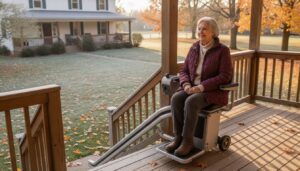
Sometimes, a chair isn’t the right fit for your specific needs. If you find that transferring in and out of a seat is too painful for your joints, a vertical platform lift offers a powerful alternative. These lifts act like a personal, open-air elevator that carries you and any mobility aids you might use. They’re especially popular for outdoor use. If you have a high porch or a deck that has become a barrier to the outdoors, a VPL can be integrated into your landscaping to provide a level, secure path to your garden or driveway. They provide a sense of stability that is hard to match, especially when getting upstairs with bad knees is no longer a safe option.
You shouldn’t have to wait for a fall to take action. Making a proactive choice about your home’s accessibility is the best way to ensure your safety for years to come. If you’re ready to see how these tools can fit into your life, get your free same-day estimate today and take the first step toward a more comfortable, worry-free home.
Taking the Next Step Toward a Safer Home in Indiana
Deciding to modify your home is a significant step toward preserving your lifestyle. While DIY tips and temporary fixes offer some relief, they often act as a bandage rather than a long-term solution. When the challenge of getting upstairs with bad knees starts to limit your life, a professional home assessment provides a clear path forward. You shouldn’t have to guess which solution is right for your specific staircase or your physical needs. A professional evaluation removes the uncertainty and ensures that every modification is installed with technical precision and care.
Choosing a local partner makes a world of difference. We believe in treating our customers with the same respect we’d show our own family members. Our roots are deep in the Indiana community, and we take personal accountability for your safety. This neighborly approach means we aren’t just selling equipment; we’re helping you reclaim the home you love. You deserve a partner who is patient, knowledgeable, and committed to your long-term comfort.
The Professional Assessment Process
Our assessment is designed to be unhurried and thorough. We begin by taking precise measurements of your staircase to ensure a custom fit, whether you have a simple straight run or a complex set of turns. We don’t just look at the wood and carpet; we evaluate your specific mobility goals. We’ll discuss how you move, where you feel the most pain, and what would make you feel most secure. We also take the time to explain warranty details and long-term maintenance, so you feel confident in the reliability of your new tools. This isn’t a high-pressure sales visit. It’s a conversation about your freedom.
Reclaiming Your Independence
The journey from feeling “stuck” on the ground floor to moving freely through your entire home is shorter than you might think. By choosing to adapt your environment, you’re making a proactive choice for your health and dignity. Indiana Home Safety & Mobility has spent years supporting local families as they navigate these changes. We understand that your home is your sanctuary, and we’re here to help you keep it that way. You don’t have to struggle with getting upstairs with bad knees alone; help is available right here in your community.
Don’t let your stairs dictate how you live your life. Reclaiming your upstairs means reclaiming your peace of mind and your personal autonomy. If you’re ready to explore the possibilities for your home, get your free same-day estimate today. You deserve to move through every room of your house with ease, security, and a sense of total tranquility.
Reclaim Your Home and Your Peace of Mind
Your home should be a place of comfort, not a source of physical stress or anxiety. We’ve explored how simple changes, like leading with your stronger leg or improving your stairwell lighting, can make a significant difference today. However, we also know that getting upstairs with bad knees often requires a more permanent solution to truly restore your independence. You deserve to enjoy every corner of your house without the fear of a fall or the burden of sharp joint pain.
As a locally owned and operated business right here in Indiana, we’re dedicated to helping our neighbors live safely and with dignity. Our certified technicians provide 24/7 support to ensure your equipment is always reliable. With factory-direct pricing and lifetime warranties, we make it easy to choose a solution that protects your future. You can take the first step toward a more secure lifestyle today. Get Your Free Same-Day Estimate and see how easy it is to make your entire home accessible again. We’re here to guide you every step of the way toward a safer, happier home life.
Common Questions About Navigating Stairs
Is it better to go up stairs sideways with bad knees?
Turning sideways can sometimes offer relief because it changes the angle at which your joints bend. By leading with your stronger leg and keeping both hands on the rails, you might find it easier to manage the climb. However, this method can affect your balance, so it isn’t always the best long-term strategy for getting upstairs with bad knees. If you feel unsteady, it’s safer to look into more stable mobility options that provide total physical security.
Can I use a cane while going up stairs?
You can certainly use a cane, but it should never replace the security of a sturdy handrail. When ascending, move your stronger leg up first, then bring the cane and your weaker leg up to meet it on the same step. This extra point of contact provides a sense of physical protection. Just be careful not to lean too heavily on the cane, as the handrail should remain your primary source of support for weight distribution.
How much does a basic stairlift cost in Indiana?
The cost of a stairlift in Indiana depends on several factors, including the length of your staircase and whether it’s straight or curved. Since every home is different, we recommend a professional consultation to get an accurate figure for your specific space. This ensures you aren’t paying for features you don’t need while getting a solution that fits your budget. Local experts can help you explore factory-direct options and even used models to find a great fit.
Will a stairlift damage my walls or stairs?
A stairlift won’t damage your walls because the system is bolted directly to the stair treads themselves. This specialized installation ensures the rail is incredibly stable without needing to touch your drywall or paint. If you ever decide to remove the lift, the small holes in the treads are easy to fill or cover. It’s a clean process that preserves the domestic environment you’ve worked hard to maintain while adding essential accessibility.
Are there exercises that make climbing stairs easier?
Exercises that strengthen your quadriceps and glutes can often make the daily task of getting upstairs with bad knees feel much lighter. Simple, low-impact movements like seated leg extensions or calf raises help build the “support system” around your knee joints. Always talk to your doctor or a physical therapist before starting a new routine. Building muscle strength is a wonderful way to maintain your personal autonomy and reduce the risk of a future fall-related injury.
What happens if the power goes out while I am on a stairlift?
You don’t have to worry about being stranded during a power outage because modern stairlifts run on a dedicated battery system. The lift stays charged while it’s parked at the top or bottom of the rail. If the electricity goes out, the battery has enough power to get you up or down safely for several trips. This built-in protection provides emotional tranquility, knowing you’ll never be stuck between floors when the lights go out.
Does insurance or Medicare cover home mobility modifications?
Medicare typically doesn’t cover the cost of stairlifts because they classify them as home modifications rather than medical equipment. However, there are other paths to explore, such as VA benefits or specific Medicaid waivers available here in Indiana. Some homeowners also find that these costs are tax-deductible if they’re considered medically necessary. It’s a good idea to check with your insurance provider or a financial advisor to see exactly what funding options apply to your situation.
How do I know if my stairs are wide enough for a stairlift?
Most standard staircases are wide enough for a lift, but we generally look for a minimum width of about 30 inches. This ensures there’s enough room for the chair to move freely while still leaving space for other family members to walk by. The best way to know for sure is to schedule a professional assessment. A technician can take precise measurements and help you visualize how the equipment will fit into your specific living space without causing an obstruction.
Disclaimer
Indiana Home Safety and Mobility provides professional stairlift installation services for a wide range of nationwide and international stairlift brands. Each solution is selected based on an in-home, individual assessment to ensure the best fit for the customer’s specific mobility needs, home layout, and budget.
Our focus is on recommending stairlifts that offer the best combination of affordability, reliability, and low maintenance. By evaluating each situation on a case-by-case basis, we help customers choose the most practical and effective stairlift solution for safe, long-term use in their home.