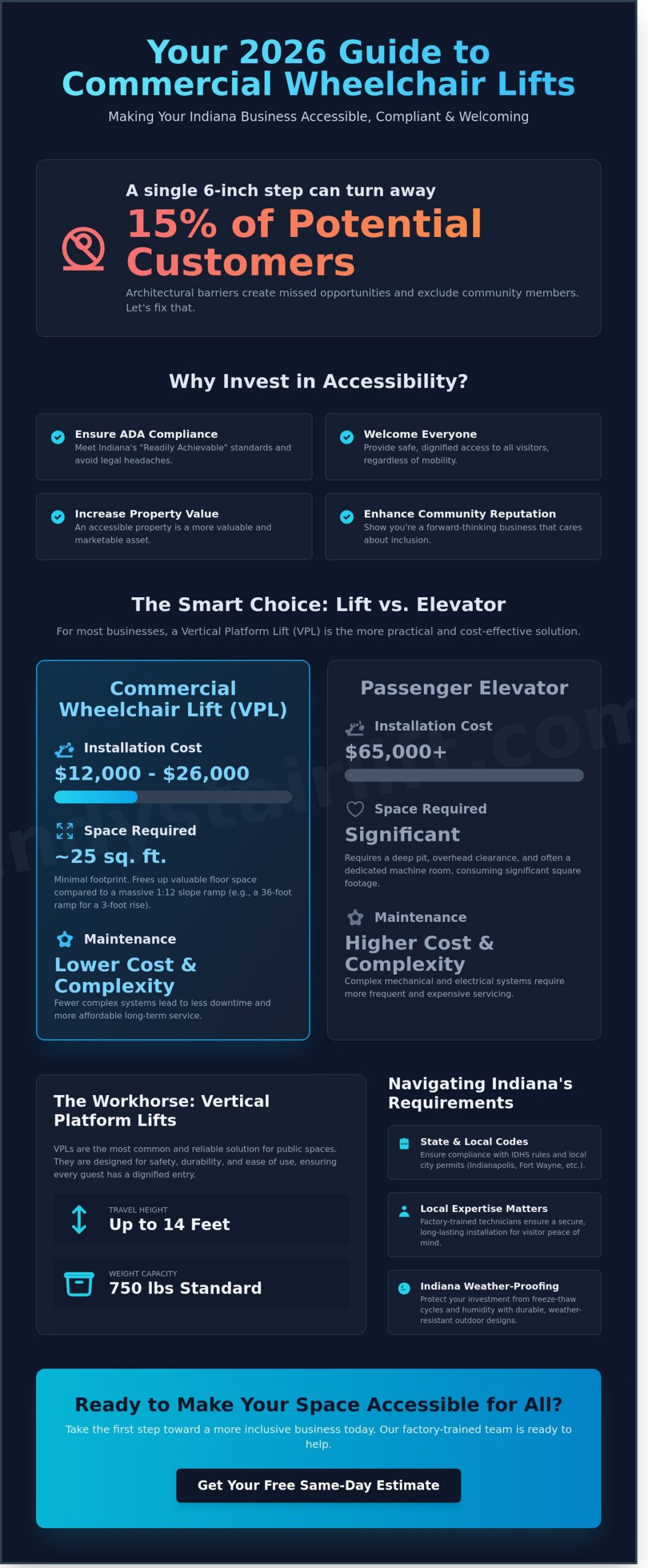
Last Tuesday, a small business owner in Carmel realized that a single 6-inch step was effectively turning away 15% of their potential customers. It’s a heartbreaking realization when you want your doors to be open to everyone, yet the complex world of ADA regulations and commercial wheelchair lifts feels like a wall in itself. You deserve to feel confident that your property is inclusive, safe, and fully compliant with Indiana building codes without the stress of confusing paperwork.
We understand that choosing the right accessibility solution can feel daunting, especially when you’re worried about long-term reliability or navigating the specific permit requirements in cities like Indianapolis or Fort Wayne. This 2026 guide will give you a clear path forward. You’ll learn how to select equipment that ensures every visitor enters with dignity, while gaining the peace of mind that comes from expert, local support. We’ll cover everything from specific lift models to the maintenance schedules that keep your business running smoothly for years to come.
Ready to make your space accessible today? Get Your Free Same-Day Estimate or Get Your Free Assessment to start your journey toward a more welcoming business.
Key Takeaways
- Discover how commercial wheelchair lifts provide a safe and dignified way for everyone to access your Indiana business while meeting strict ADA standards.
- Learn the differences between standard and enclosed lift models to determine which solution best fits your building’s height and safety requirements.
- Understand how to protect your investment from Indiana’s unique freeze-thaw cycles and humidity with weather-resistant finishes and durable outdoor designs.
- Navigate the essential Indiana Department of Homeland Security (IDHS) codes and local permit processes to ensure your organization remains fully compliant.
- Find out why local, factory-trained expertise is vital for a secure installation that offers your visitors long-term independence and peace of mind.
Understanding Commercial Wheelchair Lifts for Indiana Organizations
Making your business or organization accessible is about more than just following a law. It’s about welcoming every member of our community with the respect and dignity they deserve. We understand that navigating building codes can feel overwhelming, but we’re here to help you find a solution that offers peace of mind. A Wheelchair lift, formally known as a Vertical Platform Lift (VPL), is a reliable tool designed to help individuals in wheelchairs or with limited mobility travel between floor levels safely. These commercial wheelchair lifts act as a bridge to independence, ensuring that no one is turned away from your services because of a few steps.
Beyond the moral benefits, installing a lift is a sound investment. It opens your doors to a wider customer base and increases the overall property value of your Indiana storefront or office. When you make your space accessible, you’re telling your neighbors that you care about their comfort and safety. It’s a simple way to build trust and show that your business is a pillar of the local community.
ADA Compliance in the Hoosier State
The Americans with Disabilities Act (ADA) has set the standard for public access since 1990. In Indiana, businesses must follow the “Readily Achievable” barrier removal standard. This means you’re encouraged to remove physical obstacles if the task is easily accomplishable without much difficulty or expense. In growing cities like Carmel, where community reputation is everything, providing high-quality accessibility shows you’re a forward-thinking leader. It prevents legal headaches and ensures every guest feels at home the moment they arrive.
Commercial Lifts vs. Passenger Elevators
You might wonder if a full elevator is necessary, but a VPL is often the more practical choice for many Indianapolis floorplans. Let’s look at the numbers. A commercial elevator installation can easily exceed $65,000 and requires a deep pit and a dedicated machine room. In contrast, a commercial lift usually costs between $12,000 and $26,000. Lifts also save valuable square footage. While ADA rules require a 1:12 ramp slope, meaning a 36-inch rise needs 36 feet of ramp, a commercial wheelchair lifts installation only requires a footprint of about 25 square feet. Maintenance is also much simpler. Lifts have fewer complex mechanical systems than elevators, leading to lower long-term service costs and less downtime for your building.
We’re ready to help you reclaim your space and make it accessible for everyone. Our factory-trained team is standing by to provide the expert guidance you need to choose the right fit for your building. Get Your Free Same-Day Estimate and take the first step toward a more inclusive environment today.
Types of Commercial Accessibility Lifts Available in Indiana
Choosing the right equipment helps you welcome every customer who walks through your doors. As Indiana businesses prepare for 2026 accessibility standards, understanding the specific functions of various commercial wheelchair lifts is the first step toward creating an inclusive environment. Whether you’re updating a historic courthouse in Bloomington or a modern retail space in Carmel, the right lift provides more than just a ride; it offers your guests independence and peace of mind.
Vertical Platform Lifts (VPL) for Public Spaces
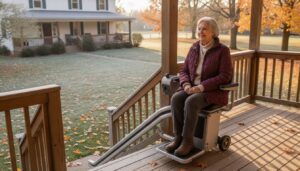
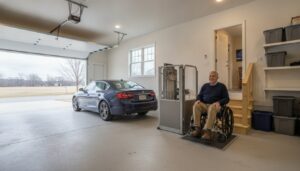
Vertical Platform Lifts, often called porch lifts, are the workhorses of commercial accessibility. These units are designed to move a user straight up and down, reaching heights up to 14 feet. They’re perfect for bridging the gap between a sidewalk and a raised entry or providing access to a mezzanine level. Most commercial-grade VPLs feature a weight capacity of 750 pounds, ensuring they can safely accommodate power wheelchairs and an attendant if necessary. When planning your layout, following the U.S. Access Board guidelines ensures your facility remains compliant and welcoming for years to come.
Safety is our primary concern for your visitors. We focus on equipment that includes these essential features:
- Non-skid platforms: These prevent slipping during snowy Indiana winters.
- Emergency stop buttons: These give users total control over their movement.
- Automatic folding ramps: These create a safety barrier while the lift is in motion.
Enclosed and Hybrid Lift Solutions
For full-height travel or outdoor installations exposed to the elements, enclosed lifts offer superior protection. These units house the platform within a custom shaft, shielding users from rain and wind. Hybrid lifts represent a sophisticated middle ground. They look and feel like a traditional elevator with a full ceiling and interior lighting, yet they maintain the smaller footprint and lower installation cost of a standard VPL. These are excellent choices for professional offices where a high-end aesthetic is a priority.
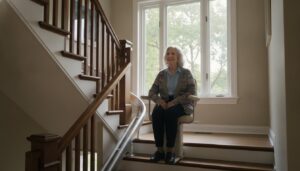
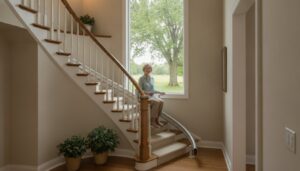
For buildings with deep architectural roots, we offer aesthetic options that respect the original design. You can choose from various finishes and glass panels that allow the lift to blend into a historic lobby rather than stand out. If you’re managing a space where a vertical lift isn’t feasible, inclined platform lifts can follow the path of your existing staircase. These units fold up when not in use, keeping your hallways clear for foot traffic. Portable commercial wheelchair lifts also serve as a vital tool for temporary events or stage access in schools, as they can be rolled into storage when the event ends.
To find the best fit for your specific building layout, you can Get Your Free Assessment from our local team. We’ve helped 85% of our commercial clients find solutions that meet both ADA requirements and their specific budget goals. Reclaiming your space for everyone shouldn’t be a stressful process, and we’re here to guide you through every technical detail with the care your business deserves.
Indoor vs. Outdoor Commercial Lifts: Planning for Indiana Weather
Indiana weather asks a lot of your equipment. We know that choosing between an indoor or outdoor setup depends on your building’s footprint and the comfort of your guests. Outdoor commercial wheelchair lifts face unique stress from our state’s 25 to 30 annual freeze-thaw cycles. These cycles cause metal components to expand and contract, which can lead to alignment issues if the lift isn’t built for local conditions. We want you to feel confident that your investment will work every time a guest needs it, regardless of the temperature outside.
In the Ohio River Valley, summer humidity often stays above 70 percent for weeks at a time. This constant moisture creates a breeding ground for rust on standard steel. We recommend placing outdoor units on the south side of buildings whenever possible to maximize sun exposure and speed up snow melt. If your lift is in a high-traffic area, a full enclosure or a custom canopy provides essential peace of mind by keeping the platform dry and inviting for everyone. Technical ADA requirements for platform lifts specify that these units must stay level and clear, and keeping the route free of ice is a major safety priority for any business owner.
Weatherization Features for Indiana Winters
To ensure your lift remains a reliable tool for independence during a January blizzard, we focus on rugged weatherization. Heated floor panels prevent the 1/4 inch of ice buildup that often stops a platform from leveling correctly. We ensure all electrical boxes carry a NEMA 4 rating to seal out driving rain and melting slush. For businesses in South Bend facing 60 plus inches of lake-effect snow, we suggest stainless steel finishes over powder-coated aluminum to provide maximum corrosion resistance and long-term beauty. Many homeowners face similar challenges with wheelchair platform lift outdoor installations, where weather resistance becomes even more critical for daily reliability.
Interior Installation Considerations
Bringing a lift inside protects it from the elements but requires careful planning for your floor plan. We help you place vertical platform lifts so they don’t block 36-inch wide fire exit paths or create bottlenecks in your lobby. In quiet spaces like the 150 plus public libraries across Indiana, we select drive systems that operate under 50 decibels to maintain a peaceful atmosphere. Most of our commercial units run on standard 110V power, though high-use buildings might need a dedicated 220V circuit to handle 20 or more trips per hour safely.
If you’re ready to make your business more welcoming and accessible, our team is standing by to help. Get Your Free Same-Day Estimate or contact us today to Get Your Free Assessment.
Navigating Permits and ADA Requirements in Indiana Cities
Opening your business to every member of the community is a powerful way to show you care. It provides dignity and freedom for those with mobility challenges while ensuring your building remains a welcoming space for all. However, ensuring your facility meets Indiana state law requires more than just buying equipment. The Indiana Department of Homeland Security (IDHS) regulates all commercial wheelchair lifts under the 675 IAC 21 code. This safety standard ensures that every lift provides a secure experience for the user and meets the rigorous ASME 18.1 national safety requirements.
In 2026, compliance is a vital step for your Certificate of Occupancy. Whether you operate a retail shop in Indianapolis, a church in Fort Wayne, or an office in Evansville, you’ll need a state-issued installation permit before any work begins. This process involves submitting detailed technical drawings and site plans to the IDHS for a formal plan review. We understand this sounds like a lot of red tape. Our team at Indy Stairlift handles these technical hurdles for you. We focus on the logistics so you can focus on running your business with peace of mind.
Understanding Local Indiana Building Codes
Indiana often adopts specific amendments to national building codes. A lift that is legal in a neighboring state might fail a local inspection here. Commercial code compliance is much stricter than residential standards. It requires specific fire-rated materials, precise platform dimensions, and emergency communication systems. We work closely with local building officials in the Indy metro area to ensure your project stays on schedule. Our experience helps you avoid 100% of common filing errors that often delay project timelines.
The Local Permit and Inspection Process
You should expect a timeline of 3 to 6 weeks for permit approval in major hubs like Indianapolis. Once our factory-trained technicians finish the installation, an Indiana state inspector will perform a final walkthrough. They check for weight capacity, door interlocks, and smooth operation. We attend these inspections personally to answer questions and ensure a successful outcome. Our goal is to make the transition to an accessible space as calm and logical as possible for your team. We treat your business with the same respect we would show our own family.
Ready to make your business more inclusive and accessible? Get Your Free Assessment from our local experts today.
Professional Installation: Why Local Expertise Matters in Indiana
Choosing the right team to install your lift is just as vital as the equipment itself. General contractors often lack the 120 hours of specialized factory training required to handle complex commercial wheelchair lifts. When a lift isn’t calibrated with precision, it can lead to a 35% increase in mechanical failures within the first two years. Our technicians live and work in Indiana. They understand how our state’s varied topography and seasonal frost cycles can shift a foundation, which directly affects the lift’s level and long-term safety.
We know that for an Indiana business, a broken lift means a closed door for some of your most valued guests. That’s why we offer 24/7 on-call support. You won’t have to wait days for a technician from a different state to arrive. Reliability is our hallmark. Regular maintenance through a local service plan prevents 80% of common service interruptions. This ensures your facility remains compliant and welcoming every single day of the year. We catch small wear-and-tear issues before they turn into expensive repairs or unexpected downtime.
The reliability of these machines often hinges on the quality of their internal components, such as plastic guide rails and bearings that must withstand constant use. To see examples of how such durable parts are manufactured for various types of machinery, you can visit Slideways, Inc..
Customizing Your Accessibility Solution
Your business space is unique, and your budget matters. We provide personalized consultations to identify the most cost-effective way to integrate Vertical Platform Lifts into your existing floor plan. You can choose from a variety of durable finishes and powder-coated colors to ensure the equipment complements your business branding. We focus on making the lift a natural part of your architecture. Our goal is to provide a solution that feels like an upgrade to your building rather than an afterthought.
The Indy Stairlift Difference
Our about us story began with a simple mission: to treat our Indiana neighbors with the same care we give our own families. We’re a locally owned business committed to helping you maintain a space where everyone feels welcome. We prioritize safety and dignity in every installation. This ensures long-term independence for your visitors and total peace of mind for you as a business owner. We’ve helped over 500 local businesses stay compliant since our founding, and we’re ready to help you too.
Don’t let accessibility hurdles hold your business back. It’s time to create a space that welcomes everyone with open arms and reliable equipment. Our team is standing by to help you find the perfect fit for your specific needs and budget.
Get Your Free Same-Day Estimate today or reach out to Get Your Free Assessment and take the first step toward a more inclusive business environment.
Transform Your Indiana Facility for a More Accessible 2026
Preparing your organization for 2026 means more than just meeting basic ADA requirements. It’s about providing dignity and independence for every visitor who enters your building. Choosing the right commercial wheelchair lifts requires careful planning for Indiana’s 40 inches of annual precipitation and strict local permitting processes. By focusing on factory-trained installation and weather-resistant designs, you ensure your investment provides long-term safety and reliability for years to come.
As a locally owned business, we’re deeply committed to our Hoosier neighbors. We provide 24/7 on-call support to our commercial clients across all 92 Indiana counties, ensuring your facility remains accessible every hour of the day. Our certified factory-trained technicians bring expert knowledge to every project, so you don’t have to worry about the technical details or complex regulations. We’ll handle the logistics while you focus on serving your community. Let’s make your space inclusive for everyone starting today.
Get Your Free Same-Day Estimate
We look forward to helping you create a welcoming environment where every person feels valued and free to move.
Frequently Asked Questions
Is a wheelchair lift cheaper than a ramp for an Indiana business?
A wheelchair lift is often more affordable than a ramp when your vertical rise exceeds 30 inches. For a 3-foot rise, ADA guidelines require 36 feet of ramp, which can cost between $4,500 and $8,000 depending on the materials used. Our commercial wheelchair lifts provide a compact solution that saves you money on construction and land use. If you want to compare costs for your specific building, Get Your Free Same-Day Estimate today.
How much space is required for a commercial vertical platform lift?
You generally need a clear floor space of 60 inches by 60 inches for a standard commercial vertical platform lift. This 25-square-foot footprint fits easily into tight corners where a long ramp simply won’t work. We ensure your installation meets all 2026 Indiana building codes while keeping your hallways clear. This compact design helps you maintain a welcoming environment for every visitor who walks through your doors.
Do I need a special permit to install a wheelchair lift in Indianapolis?
Yes, you must obtain a permit from the Indiana Department of Homeland Security (IDHS) and local Indianapolis building authorities before installation. Our team handles the filing of State Form 48821 to ensure your project stays on schedule and meets legal requirements. We take the stress out of paperwork so you can focus on running your business. Let us guide you through the process when you Get Your Free Assessment.
What is the weight capacity of a standard commercial wheelchair lift?
A standard commercial lift supports up to 750 pounds, which safely accommodates a passenger and a heavy motorized wheelchair. Some heavy-duty models increase this capacity to 1,000 pounds for high-traffic environments. This strength provides peace of mind for your clients and ensures your business remains a safe haven for everyone. We only install factory-trained, robust equipment that stands the test of time, using industrial-grade automation parts; for a look at the types of components that ensure this reliability, you can visit InstroDirect.
Can a commercial wheelchair lift be installed on an existing staircase?
We can install an inclined platform lift directly onto your existing staircase without requiring major structural changes. This solution is perfect for historic Indiana buildings where space is limited and adding an elevator shaft isn’t an option. It folds up when not in use, keeping the stairs open for other guests. It’s a beautiful way to offer independence while respecting the architectural integrity of your property.
How often does a commercial lift need to be inspected in Indiana?
Indiana law requires a professional safety inspection for commercial lifts once every 12 months. These annual checks, mandated by the IDHS, ensure every component functions perfectly to prevent unexpected downtime. We provide scheduled maintenance plans to keep your equipment in peak condition and your business fully compliant. Regular service protects your investment and ensures your customers always have a reliable way to move between floors.
What happens if my commercial lift breaks down after hours?
We provide 24/7 emergency repair services to ensure your business never faces an accessibility crisis. If a lift stops working at 8:00 PM on a Friday, our local technicians are ready to respond immediately. We understand that a broken lift isn’t just a mechanical issue; it’s a barrier to someone’s freedom. Our goal is to restore your service quickly so you can keep your promise of safety to your customers.
Are there tax credits for Indiana businesses that install wheelchair lifts?
Small businesses in Indiana can claim the Section 44 Disabled Access Credit, which covers 50% of eligible access expenditures up to $10,250. This can result in a maximum tax credit of $5,000 each year for your accessibility upgrades. You may also qualify for the Section 190 tax deduction of up to $15,000 for removing architectural barriers. These incentives make it much easier to invest in the comfort and dignity of your visitors.
Disclaimer
Indiana Home Safety and Mobility provides professional stairlift installation services for a wide range of nationwide and international stairlift brands. Each solution is selected based on an in-home, individual assessment to ensure the best fit for the customer’s specific mobility needs, home layout, and budget.
Our focus is on recommending stairlifts that offer the best combination of affordability, reliability, and low maintenance. By evaluating each situation on a case-by-case basis, we help customers choose the most practical and effective stairlift solution for safe, long-term use in their home.