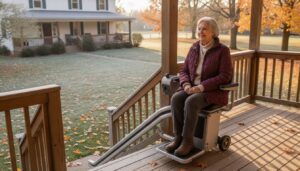
Did you know that nearly 90% of homes in the U.S. aren’t currently equipped to help adults age safely and comfortably? For many of our neighbors here in Indiana, a stairlift is the essential tool that makes staying in a long-term family home possible, which is why following a regular stairlift maintenance checklist is so vital. We know that the thought of a mechanical breakdown or a surprise repair bill can cause real worry. You deserve to feel completely secure every time you press that start button.
We understand that you rely on your lift for your daily freedom, and the last thing you want is to feel stranded or confused by technical jargon. This guide is designed to give you total peace of mind and protect your independence. By spending just a few minutes on simple care, you can extend the life of your equipment and avoid the stress of emergency service calls. We’ll show you exactly how to keep your home accessible and your movements smooth, so you can focus on enjoying your space rather than worrying about the machinery.
Key Takeaways
- Master the 60-second daily track check and weekly cleaning routine that prevents common mechanical stops caused by household objects.
- Follow our easy stairlift maintenance checklist to verify that your safety sensors and emergency stop features are always ready to protect you.
- Understand how to manage Indiana-specific challenges like summer humidity and winter road salt to preserve your rail and motor life.
- Learn why a professional annual inspection is vital for keeping your lifetime warranty intact and identifying wear before it becomes a problem.
- Gain total peace of mind by knowing when to perform simple homeowner care and when to call our certified local technicians for help.
Daily and Weekly Habits: The Foundation of Stairlift Safety
Maintaining your independence at home should never feel like a chore or a source of stress. When you understand what a stairlift is and how it serves your daily life, small care steps become second nature. Following a consistent stairlift maintenance checklist starts with simple, rhythmic habits that protect both your equipment and your peace of mind. These tiny investments of time ensure that your journey between floors remains as smooth and reliable as the day we first installed it for you.
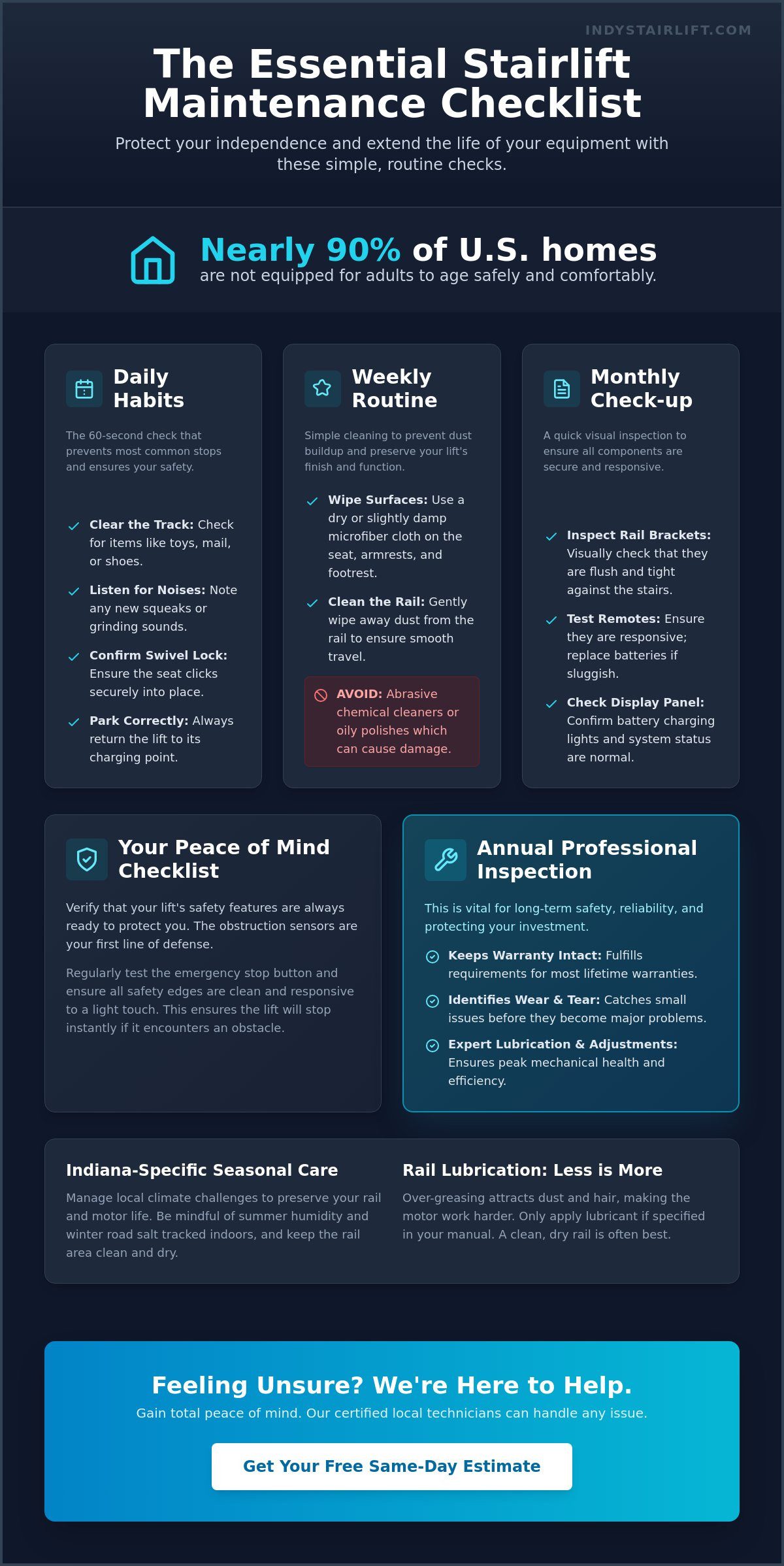
We recommend starting every day with a quick visual sweep. Before you even sit down, take a moment to listen as the unit moves. You should hear a steady, quiet hum. If you notice any unusual squeaks or a new grinding noise, it’s often a signal that a small adjustment is needed before it becomes a bigger issue. Additionally, always verify that your swivel seat locks firmly into place before you attempt to sit or stand. This simple click is your physical guarantee of security. Once you reach the end of your trip, ensure the chair reaches its designated “park” position. This allows the batteries to stay topped off and ready for your next move.
The 60-Second Daily Track Check
Your stairs are a busy part of your home, and it’s easy for small items to end up where they shouldn’t be. A single stray sock, a forgotten pet toy, or even a fallen piece of mail can cause the lift to pause mid-trip. This isn’t a mechanical failure; it’s actually a safety feature in action. The obstruction sensor acts as the lift’s first line of defense, stopping the motor instantly if it feels any resistance. By keeping the top and bottom landings clear of household objects, you prevent these sudden stops and keep your ride comfortable. It only takes a minute to look down the rail and ensure the path is clear for your next journey.
Simple Cleaning for Long-Term Reliability
Dust and pet hair are part of every Indiana home, but they don’t have to interfere with your mobility. We suggest a gentle weekly wipe-down of the seat, armrests, and footrest to keep things fresh. A dry or slightly damp microfiber cloth is the best tool for this job. It’s vital to avoid using abrasive chemical cleaners or oily polishes, as these can degrade the rail finish or make surfaces slippery. Over time, dust buildup can affect the motor rollers, making the lift work harder than it needs to. By keeping the rail clean and dry, you ensure the motor glides effortlessly, preserving the life of your stairlift for years to come.
Monthly Maintenance Tasks: Going Beyond the Surface
Once a month, it’s helpful to step back and look at the bigger picture of your home’s mobility system. While daily habits keep things tidy, your monthly stairlift maintenance checklist focuses on the mechanical health that keeps you moving between floors without a second thought. These checks are simple and strictly visual, meaning you don’t need a toolbox to ensure your equipment remains in peak condition. We want you to feel confident that every component, from the rail brackets to the remote controls, is working exactly as it should.
Begin by taking a close look at the rail brackets that secure the system to your stairs. You don’t need to pull on them; a simple visual check to ensure they look flush and tight is plenty. Next, pick up your remote controls. Even if you usually use the toggle on the chair, testing the remotes ensures they’re responsive when a loved one needs to “call” the lift to a different floor. If the response feels sluggish, it’s likely time for fresh batteries. Finally, check the visual display on the carriage itself. Most modern units feature a small screen or a series of lights that confirm the battery is charging correctly and the system is healthy.
Rail Care and Proper Lubrication
One of the most common misconceptions we hear is that the rail needs frequent greasing. In reality, most modern stairlifts require very little lubrication to operate smoothly. If you apply too much grease, it acts like a magnet for Indiana dust, pet hair, and carpet fibers. This buildup creates friction, which actually makes the motor work harder. If you see a thick, dark residue, it’s time to gently wipe it away with a dry cloth. Before adding any lubricant, always consult your stairlift installation manual to see which specific grease types are recommended for your model. Keeping the rail “clean-dry” is often better than over-lubricating.
Battery Health and Power Connection
It’s important to remember that your lift actually runs on batteries rather than directly from your wall outlet. The outlet simply provides a “trickle charge” to keep those batteries full. To follow industry safety standards, your lift should stay plugged into its 110v outlet 24 hours a day. If you notice the lift moving slower than usual or hear a persistent beeping when it’s parked, the batteries might be losing their capacity to hold a charge. Keeping the power connection constant is the best way to preserve battery life and ensure you’re never left without a ride during a local power outage. If you ever feel uncertain about your lift’s performance, you can always request a professional home assessment to ensure everything is running perfectly.
Seasonal Considerations for Indiana Stairlifts
Living in the Hoosier State means preparing for everything from sweltering July afternoons to sudden January ice storms. Just as you swap out your wardrobe or service your furnace, your stairlift maintenance checklist should adapt to the changing Indiana weather. Our local climate presents unique challenges that can affect how your lift operates. By staying ahead of these seasonal shifts, you ensure your home remains a sanctuary of comfort and accessibility all year long.
During our long winters, we often track in more than just snow. Road salt and grit from your boots can easily settle on your indoor rail, creating a gritty surface that wears down the motor rollers prematurely. It’s a good habit to check the bottom landing more frequently during the snowy months. Similarly, Indiana’s spring and summer storm seasons bring the risk of sudden power outages. While your lift has a reliable battery backup, ensuring it’s always parked on a charging point during a thunderstorm is the best way to guarantee you’re never without a ride when the lights go out.
Neglecting these simple seasonal adjustments can lead to potential safety hazards that are easily avoidable with a little proactive care. At Indiana Home Safety & Mobility, we want every one of the 20% of Indiana residents who will be seniors by 2035 to feel confident and secure in their own homes, regardless of what the weather is doing outside.
Protecting Your Outdoor Investment
If you have one of our outdoor stairlifts, winterization is your top priority. Always use the provided weather cover whenever the lift isn’t in use to protect the seat and electronics from freezing rain. If ice does form on the rail, don’t try to force the lift to move. Instead, use a soft brush or a plastic scraper to gently clear the ice from the gear teeth. Never use harsh de-icing chemicals, as these can corrode the metal and damage the sensitive internal sensors that keep you safe.
Humidity and Indoor Mechanicals
High humidity during Indianapolis summers can sometimes lead to a “sticky” feeling during travel. Moisture in the air can cause dust to clump together on the rail, which increases friction and makes the motor work harder. If your stairwell feels particularly damp, using a dehumidifier nearby can help protect the electrical components and keep the ride smooth. It’s also helpful to know that temperature-related expansion and contraction can cause a rail to shift by fractions of an inch over many years, potentially impacting the long-term alignment of the system.
Safety Sensor Testing: Your Peace of Mind Checklist
Your safety is our absolute priority, and the sensors on your lift are the silent guardians that ensure every trip is a secure one. While we previously discussed keeping the track clear, this part of your stairlift maintenance checklist involves actively confirming that these electronic “eyes” are alert and responsive. Testing these features once a month only takes a few minutes, but it provides an invaluable sense of physical security for you and your family. We want you to feel completely in control of your mobility every time you use your lift.
Follow these five simple steps to verify your safety system is in peak condition:
- The Pillow Test: Place a soft object, such as a pillow or a cushion, on the stairs. Run the lift toward it and confirm that the footrest sensor stops the unit immediately upon contact.
- Carriage Panel Check: While the lift is moving slowly, gently press the side panels on the carriage. The unit should pause right away, proving that the sensors are ready to detect any unexpected obstacles.
- Emergency Stop Verification: Press the red emergency stop button while the lift is in motion. The power should cut instantly, bringing you to a smooth and certain halt.
- Swivel Seat Safety Switch: Turn your seat to the swivel position as if you were exiting. Try to operate the lift while the seat is turned; the safety switch should prevent any movement until the seat is locked back into the travel position.
- Visual Indicator Check: Ensure that no warning lights are flashing on the carriage once the tests are complete and the lift is back in its “park” position.
Why Safety Sensors Are Non-Negotiable
These sensors are designed to protect more than just the primary user. They are essential for homes where grandchildren might leave a toy on the stairs or where pets might be resting in the path of the lift. If your lift ever stops unexpectedly, it’s often a sign that a sensor is simply doing its job to keep you safe. If you ever hear a persistent beeping and aren’t sure why, you can check our FAQ section for quick troubleshooting tips that can put your mind at ease.
Troubleshooting Common Sensor Issues
Sometimes a sensor might seem “stuck,” but it’s often just a bit of Indiana dust or a small piece of debris caught in the edge of the footrest. You can usually resolve this by gently tapping the edge of the sensor panel to ensure it moves freely. Most standard residential units can be reset by turning the power off and back on at the main switch. However, if a sensor remains unresponsive or the lift won’t move even when the path is clear, it’s best to stop troubleshooting and call for professional stair lift service. To ensure your system is always ready when you need it, you can Get Your Free Same-Day Estimate for a professional safety assessment today.
The Annual Professional Inspection: When to Call the Experts
While the daily and monthly steps of your stairlift maintenance checklist are the foundation of a reliable home, some tasks require a specialized touch. An annual professional inspection is the most effective way to ensure your long-term independence remains uninterrupted. At Indiana Home Safety & Mobility, we see this visit as a comprehensive health check for your home’s most important tool. It isn’t just about looking at the surface; it’s a deep dive into the technical heart of the machine to prevent minor wear from turning into a major component failure down the road.
Beyond just safety, these visits are often a manufacturer requirement to preserve your equipment’s lifetime warranty. There is a clear difference between regular homeowner care and technical service. While you focus on keeping the track clean and the seat tidy, our certified technicians handle the complex mechanical adjustments that keep the system within its original factory specifications. This partnership ensures your lift remains a stable, quiet, and secure part of your daily routine for years to come.
What Happens During a Professional Visit?
Our experts perform a rigorous 25-point safety check. During this time, we examine the motor brush wear and the precision of the gear alignment. We also test the battery load capacity to ensure you have plenty of power during a potential outage. This involves deep-cleaning internal components that are safely tucked away behind the carriage panels where homeowners can’t reach. The end result is a clean bill of health that lets you rest easy, knowing your lift is operating at its absolute best. This preventative care is the best way to avoid the stress of an unexpected breakdown.
Building a Relationship with Your Local Indiana Team
We take great pride in being more than just a service provider; we’re your local partners in accessibility. Whether you have a brand-new installation or one of our pre-owned stairlifts, we understand the specific needs of Indiana families. These used models benefit from regular expert eyes to ensure they continue to provide the same level of security as a new unit. Indiana Home Safety & Mobility is here to support you with 24/7 on-call emergency support and a genuine commitment to your personal dignity. If you’re ready to ensure your home remains fully accessible and safe, Get Your Free Same-Day Estimate and let us help you keep your independence moving smoothly.
Reclaiming Your Entire Home with Confidence
Taking these small, proactive steps today ensures your home remains the place of comfort and freedom you deserve. From the simple 60-second daily track checks to following your monthly stairlift maintenance checklist, you’re doing much more than just looking after a piece of machinery. You’re protecting your personal dignity and your ability to move through your living space with total ease. These habits prevent the anxiety of unexpected breakdowns and keep your daily routine moving without a hitch.
As a locally owned Indiana business, we’re deeply committed to your safety and long-term security. Our certified technicians for all major brands possess the specialized expertise to handle the complex technical checks that go beyond standard homeowner care. We also offer 24/7 on-call emergency support, providing a pervasive sense of reliability for you and your concerned family members. You don’t have to manage your home modifications alone when you have a trusted local neighbor ready to help.
If you want the peace of mind that comes from a professional assessment, Get Your Free Same-Day Estimate and let us help you keep your independence moving smoothly. Your home is your sanctuary, and we’re honored to help you stay right where you belong.
Frequently Asked Questions
How often should I clean my stairlift track?
You should perform a quick visual check of your track every day to remove any stray household objects and give the rail a gentle wipe with a dry cloth once a week. This simple step in your stairlift maintenance checklist prevents dust and pet hair from building up, which keeps the motor running smoothly. Regular cleaning is the easiest way to protect your equipment from the common grit and dust found in Indiana homes.
What kind of lubricant should I use on the stairlift rail?
Most modern residential lifts require very little lubrication and often stay smooth with just a clean, dry rail. If your specific model does require grease, you must only use the type recommended by the manufacturer, as the wrong product can attract debris and cause the motor to struggle. It is best to consult your installation manual or ask a professional technician before applying any substances to the rail surface to avoid creating a “sticky” buildup.
Why is my stairlift beeping and how do I stop it?
A persistent beeping sound usually serves as a helpful reminder that the lift isn’t parked correctly on a charging point. To stop the sound, simply move the carriage to the very top or bottom of the stairs until it settles into its “park” position. This ensures the batteries are receiving the trickle charge they need to stay healthy and ready for your next trip, giving you total peace of mind.
How long do stairlift batteries typically last?
Stairlift batteries typically provide reliable service for three to five years before they need to be replaced. Their lifespan depends on how often you use the lift and whether it stays plugged into a power source consistently. If you notice the lift moving slower than usual or struggling with the weight of a rider, it’s a clear sign that the batteries are reaching the end of their functional life and need professional attention.
Can I perform my own technical repairs on the motor?
We strongly advise against attempting any mechanical or electrical repairs on the motor yourself. These systems involve complex components and high-tension springs that require specialized tools and certified expertise to handle safely. Attempting a DIY repair can void your manufacturer’s warranty and, more importantly, could compromise the safety features that protect your personal dignity and physical security during every journey between floors.
Do I need to keep the stairlift plugged in all the time?
Yes, you should keep your lift plugged into its dedicated wall outlet 24 hours a day. The system uses a very small amount of electricity to maintain a charge for the batteries, ensuring they are always at full capacity. This constant connection is vital because it guarantees the lift will still function perfectly even during a local power outage or a sudden Indiana summer storm.
What should I do if my stairlift stops halfway up the stairs?
If your lift pauses mid-trip, the first thing to do is check the footrest and carriage sensors for any obstructions like a loose rug or a stray shoe. You should also verify that the swivel seat is locked firmly in the travel position and that the armrests are down. If the path is clear and the seat is locked but the lift still won’t move, please use your remote to call for professional assistance immediately rather than trying to force it.
How much does an annual stairlift maintenance visit cost?
The cost for a professional maintenance visit can vary based on the specific model of your lift and the level of service required. While we don’t provide a universal price, these annual check-ups are a valuable investment in the longevity of your equipment and your personal safety. Many local families find that regular inspections are much more affordable than the cost of emergency repairs or major component replacements that could have been avoided.
Disclaimer
Indiana Home Safety and Mobility provides professional stairlift installation services for a wide range of nationwide and international stairlift brands. Each solution is selected based on an in-home, individual assessment to ensure the best fit for the customer’s specific mobility needs, home layout, and budget.
Our focus is on recommending stairlifts that offer the best combination of affordability, reliability, and low maintenance. By evaluating each situation on a case-by-case basis, we help customers choose the most practical and effective stairlift solution for safe, long-term use in their home.