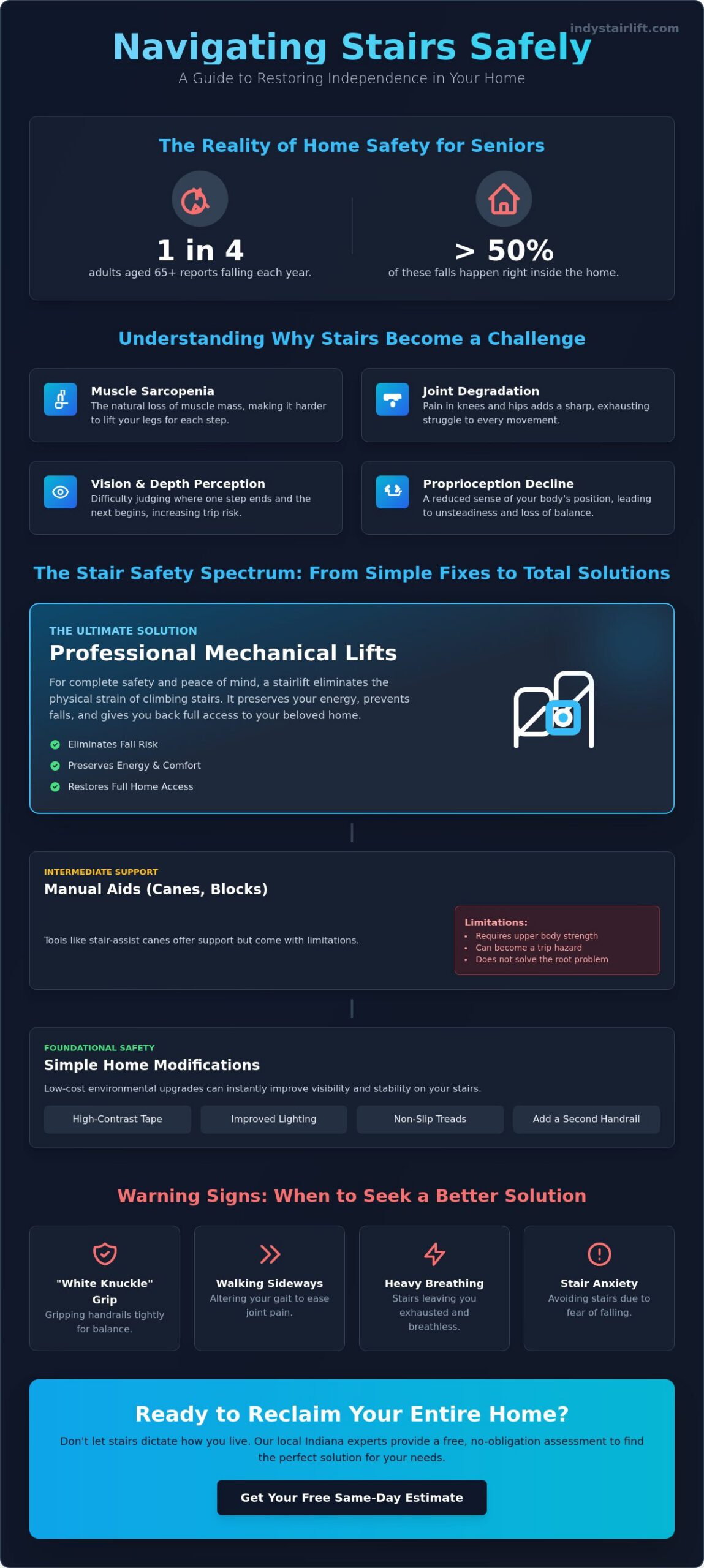
One in four adults aged 65 and older reports falling each year, and more than half of those injuries happen right inside the home. For many Indiana families, finding reliable help for elderly to climb stairs is about more than just convenience. It’s about protecting the person you love and ensuring they never feel like a prisoner on the ground floor of their own house. We believe that your home should be a place of total security, not a source of anxiety or physical pain.
We understand the frustration of joint pain and the quiet fear that comes with every step. You deserve to move through your home without worry or a struggle that leaves you exhausted. In this guide, we’ll walk you through the best ways to stay safe, from simple handrail adjustments to professional solutions like straight and curved stairlifts. You’ll learn how to preserve your independence and continue aging in the home you’ve built. To start your journey toward a safer home today, you can Get Your Free Same-Day Estimate and see which options fit your unique space and needs.
Key Takeaways
- Understand how changes in vision and joint health affect your safety so you can address the root cause of mobility struggles.
- Learn about low-cost environmental upgrades like high-contrast tape and improved lighting that instantly make every step more visible and secure.
- Discover how professional mechanical solutions provide the ultimate help for elderly to climb stairs while preserving your energy and comfort.
- Identify the specific factors, such as staircase width and your own physical strength, that determine which mobility aid is your perfect match.
- Explore the peace of mind that comes from working with local Indiana experts who offer specialized assessments and professional one-day installation.
Understanding Why Climbing Stairs Becomes Difficult with Age
As we grow older, the simple act of moving between floors can start to feel like a mountain trek. This change isn’t just about “slowing down.” It is often caused by muscle sarcopenia, which is the natural loss of muscle mass that makes lifting your legs feel heavier. Joint degradation in the knees and hips adds a layer of sharp pain to every step, while a decline in proprioception, your body’s internal sense of where your feet are, can make you feel unsteady. When you’re looking for help for elderly to climb stairs, it’s vital to recognize that these physical shifts are real and deserve a practical solution.
Vision also plays a massive role in your safety. Changes in depth perception or the use of bifocals can make it hard to tell where one step ends and the next begins. Many people try to “power through” this discomfort, but pushing past your physical limits often leads to a loss of balance. This physical struggle creates “stair anxiety,” a very real psychological weight that makes you feel trapped on a single floor. Instead of enjoying your entire home, you might find yourself avoiding the stairs altogether just to stay safe. This fear can shrink your world to just a few rooms, which isn’t the lifestyle you deserve.
The Anatomy of a Stair Fall
While many people worry about climbing up, the descent is actually more dangerous. Going down requires more balance and puts significantly more pressure on your knee joints. Common hazards like loose rugs, slippery socks, or dim lighting turn a simple trip into a major risk. We define stair mobility as the ability to transition levels safely, ensuring that your environment supports your movement rather than hindering it. Understanding the mechanics of Stair Lifts can help you see how mechanical support bridges the gap when physical strength isn’t enough.
When to Seek Help for Stair Climbing
It’s time to look at your options when you notice early warning signs like gripping the handrails until your knuckles turn white or walking “sideways” to ease joint pain. Heavy breathing after just a few steps is another sign that your body is working too hard. There’s a big difference between being tired after a long day and experiencing a chronic decline in your ability to use the stairs. If the stairs have become a source of dread, a professional home safety assessment can provide clarity. Exploring modern stairlifts allows you to address these challenges before a fall occurs, keeping your independence and your dignity intact.
Manual Aids and Simple Home Modifications for Stair Safety
Simple adjustments are often the first step in providing help for elderly to climb stairs safely. Making your home more accessible doesn’t always require a major renovation right away. You can start with environmental upgrades that improve visibility and stability. For example, adding high-contrast tape to the edge of each step helps those with declining depth perception clearly see where one tread ends and the next begins. Pair this with improved lighting, such as motion-activated LED strips, to ensure no part of the staircase remains in shadow. These small changes follow the recommendations found in the Home Fall Prevention Checklist, which is an excellent resource for identifying hidden hazards.
Adding a second handrail is another vital modification. Most standard homes only have one rail, but having support for both hands allows for much better balance. We also suggest installing non-slip treads and removing thick carpet runners. While runners look nice, they can hide the actual edge of the step and increase the risk of a slip. If you’re finding these small adjustments aren’t quite enough to ease your worry, you can Get Your Free Home Assessment to explore more permanent, reliable options for your specific house layout.
The Limitations of Manual Stair Helpers
While stair-assist canes and half-step blocks are affordable, they aren’t a perfect fit for everyone. These tools often require significant upper body strength. If you struggle with arthritic shoulders or weak wrists, leaning your full weight onto a cane can cause more pain than it solves. These manual aids can also become trip hazards themselves if they aren’t placed perfectly on each step. It’s important to view these as temporary “band-aid” solutions. They don’t stop the progressive nature of mobility decline; they only manage it for a short time.
Caregiver Techniques for Assisted Climbing
If you are helping a loved one, using a transfer belt, or gait belt, is essential. It gives you a firm place to hold onto their center of gravity without pulling on their arms or clothing, which protects both of you from injury. Always remember the “Up with the good, down with the bad” rule. This means leading with the stronger leg when going up and the weaker leg when coming down. However, if a two-person assist becomes necessary to move between floors, it’s a clear signal that manual help for elderly to climb stairs is no longer the safest path forward.
Mechanical Solutions: Stairlifts and Vertical Platform Lifts
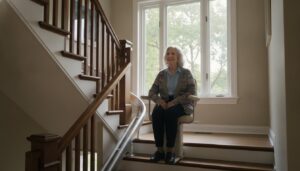
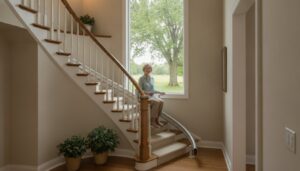
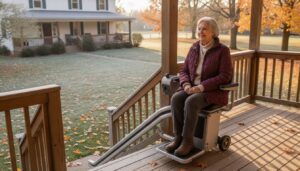
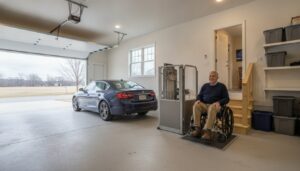
While manual aids provide some assistance, they often fall short for those who need consistent, seated support. A straight stairlift is considered the gold standard for home accessibility because it offers a smooth, reliable ride on a single, uninterrupted flight of stairs. For homes with more complex layouts, curved stairlifts are custom built to navigate landings and sharp turns without requiring you to get off the chair mid-climb. These solutions provide the most comprehensive help for elderly to climb stairs because they eliminate the physical exertion and pain associated with every step. If you need to maintain access to a porch or a beautiful tiered garden, outdoor models are engineered with weatherproof materials to withstand the elements. For those who use a wheelchair, a vertical platform lift (VPL) acts like a mini home elevator, lifting both the person and their mobility device safely between levels.
How Modern Stairlifts Preserve Home Aesthetics
Many families worry that adding mechanical equipment will ruin their home’s decor or make it feel like a clinical environment. Modern designs debunk the “hospital look” myth with slim-fold chairs that tuck away neatly when they aren’t in use, leaving plenty of room for others to walk. You can even choose custom colors to match your carpet or walls. One of the best parts of this installation is that the rails attach directly to the stair treads, not your walls, which protects your home’s structural integrity. These systems run on quiet, battery-powered drives, so they still work during a power outage and move with a gentle, hushed tone. Following stair safety tips from AARP often means looking beyond simple habits to these reliable mechanical tools that blend into your lifestyle.
Safety Features You Should Look For
Safety is the foundation of every lift we provide to our neighbors. Modern units come equipped with sensitive obstruction sensors that immediately stop the chair if a pet, a toy, or a loose object is detected on the steps. To make getting on and off easier, swivel seats allow you to turn the chair toward the landing, creating a secure barrier between you and the staircase as you stand up. Every unit uses constant-pressure controls, which means the lift only moves as long as you are actively holding the button; this ensures the user is always in complete command of their journey. If you’re ready to reclaim your entire home and move between floors without fear, you can Get Your Free Same-Day Estimate to see which lift fits your space best.
Evaluating Your Needs: Which Stair Helper is Right for You?
Choosing the right help for elderly to climb stairs is a personal decision that requires a look at both your physical health and your home’s layout. First, consider your balance and upper body strength. If you find yourself leaning heavily on walls or feeling dizzy, a seated solution is much safer than a manual aid. Cognitive clarity is also important, as the user needs to feel confident and in control when operating any equipment. Finally, look at your staircase. Its width, steepness, and the presence of landings will dictate whether a slim-profile lift or a custom curved model is the right fit for your daily life.
The “Independence Factor” is perhaps the most significant benefit of choosing the right tool. We want you to be able to move between floors whenever you like, without waiting for a family member or caregiver to assist you. True freedom in your own home means having the power to go upstairs for a book or downstairs for a snack on your own terms. It’s about reclaiming your space and your schedule while maintaining your personal dignity.
Stairlift vs. Home Elevator vs. VPL
When comparing options, think about the footprint each takes up in your home. A home elevator requires a massive construction project and permanent changes to your floor plan. A vertical platform lift is excellent for those who use a wheelchair, but it also requires a dedicated space and specific site preparation. In comparison, stairlift installation is often the least disruptive choice. It fits onto your existing steps without any major remodeling, making it a fast and efficient way to restore mobility for users who still walk but need a safer way to navigate levels.
The Hidden Costs of Waiting
We often talk to families who wish they had acted sooner. The cost of a single fall is much higher than the price of prevention, often resulting in expensive hospitalization and long rehab stays. Staying in your current home is a goal for 94% of adults over 55, and it’s almost always more affordable than moving into an assisted living facility. We understand that budget is a concern, which is why we focus on factory-direct savings to provide high-quality equipment without the middleman markup. To find a solution that fits your budget and your home, you can Get Your Free Same-Day Estimate today.
Reclaiming Your Independence with Indiana Home Safety & Mobility
Local expertise is the heartbeat of our service. For Indiana families, choosing a partner who understands our community makes all the difference. We don’t just see a staircase; we see a home that holds decades of memories. Our team provides specialized help for elderly to climb stairs by combining technical precision with genuine compassion. We know that inviting someone into your home is an act of trust, so we treat your space with the same respect we would show our own parents. You’re our neighbor, and we take that responsibility seriously.
Our certified technicians handle every detail with a professional touch. Most installations are completed in just one day, meaning your routine is barely interrupted. We’re committed to long-term reliability, offering 24/7 on-call support and lifetime warranties to ensure you never feel stranded or alone. This commitment provides more than just mobility; it gives you and your family emotional tranquility. You can rest easy knowing that a safe, accessible environment is always maintained by people who live and work right here in your community.
Our Personalized Consultation Process
Every home is different, which is why we start with a free, no-pressure home assessment. During this visit, we take the time to listen to your specific concerns and goals. If your home has turns or complex landings, we use precision technology to measure for curved stairlifts. This ensures the rail fits perfectly against your stairs, maximizing the walking path for others. We take a neighborly approach, focusing on what’s best for your lifestyle rather than pushing for a sale. It’s a one-on-one conversation meant to put you at ease.
Getting Started Today
We believe everyone deserves to feel safe at home, regardless of their budget. For families looking for high-quality solutions at a lower price point, we offer pre-owned stairlifts that have been thoroughly inspected for safety and performance. These units provide the same life-changing benefits while helping you manage costs. Scheduling your assessment is a simple, stress-free process designed to give you answers quickly. It’s time to stop worrying about the steps and start enjoying every floor of your home again. To take the first step toward reclaiming your independence, Get Your Free Same-Day Estimate and let us help you stay right where you belong.
Take the Next Step Toward a Safer Home
Reclaiming your independence starts with understanding that you don’t have to face the stairs alone. We have explored how physical changes affect your safety and why simple home modifications or professional mechanical solutions provide the most reliable help for elderly to climb stairs. Your home should always be a place where you feel secure and empowered, not limited by the layout of your own rooms. By choosing a solution that fits your specific needs, you are choosing to stay in the home you love for years to come.
As a locally owned Indiana business, we take pride in supporting our neighbors with certified professional installation and the peace of mind that comes with 24/7 emergency support. You deserve a partner who treats your family like their own and ensures every transition between floors is smooth and painless. It’s time to replace your anxiety with confidence and move freely through your entire house again. To see how we can help you today, Get Your Free Same-Day Estimate. We look forward to helping you live safely and independently.
Frequently Asked Questions
What is the most affordable way to help a senior with stairs?
The most cost-effective approach involves a combination of environmental upgrades and minor physical aids. Adding high-contrast tape to step edges, increasing the wattage of your light bulbs, and installing a second handrail provide immediate safety improvements. For those who need more support but have a limited budget, pre-owned equipment often provides the same high level of security as new models without the full price of a factory-fresh unit.
Can a stairlift be installed on narrow or steep stairs?
Yes, modern slim-line designs are specifically engineered to fit in tight spaces and on steep inclines. The rails are custom-fitted to the staircase, and the chairs feature folding arms, seats, and footrests to ensure the stairs remain passable for other family members. Even in older Indiana homes with unique architectural quirks, professional technicians can usually find a configuration that provides reliable help for elderly to climb stairs without requiring structural changes.
Does Medicare cover stair climbing aids or stairlifts in Indiana?
Original Medicare (Part A and Part B) does not cover stairlifts because the program classifies them as home modifications rather than essential medical equipment. While this can be disappointing for many families, other options might be available. You may want to check with the VA or specific state-based Medicaid programs that occasionally offer assistance for home accessibility. We focus on providing direct solutions that help you stay in your home comfortably and affordably.
How do I know if my loved one is no longer safe using a cane on stairs?
Safety is likely compromised if you notice your loved one “furniture walking” or pulling themselves up by the handrail with both hands. If a cane user stops frequently to catch their breath or expresses anxiety about the descent, the cane is no longer providing enough support. These physical and emotional signals suggest that it is time to transition to a more secure, mechanical form of help for elderly to climb stairs to prevent a life-changing fall.
What happens if there is a power outage while using a stairlift?
Your lift will continue to operate normally during a power failure because it runs on a dedicated battery backup system. The unit is constantly charging while it sits at the top or bottom of the rail, ensuring it has enough power for several trips even when the house lights go out. This feature provides vital peace of mind, knowing that you’ll never be stuck between floors or trapped on one level during a local outage.
How long does it take to install a professional stair climbing aid?
A standard straight installation typically takes between two and four hours from start to finish. Our certified technicians arrive with all the necessary tools and handle the entire process, including a full safety demonstration once the work is done. Because the rails attach to the treads rather than the wall, there is no messy construction or long-term disruption to your home. You can usually start using your new lift the very same day.
Are there rental options for stairlifts if the need is only temporary?
Yes, renting is an excellent solution for short-term needs such as recovering from a hip or knee surgery. It allows you to maintain your dignity and access your entire home during the healing process without a long-term commitment. Rentals are also a popular choice for families who are hosting an elderly relative for a few months. This flexible option ensures that safety is always a priority, even when the mobility challenge is only temporary.
Disclaimer
Indiana Home Safety and Mobility provides professional stairlift installation services for a wide range of nationwide and international stairlift brands. Each solution is selected based on an in-home, individual assessment to ensure the best fit for the customer’s specific mobility needs, home layout, and budget.
Our focus is on recommending stairlifts that offer the best combination of affordability, reliability, and low maintenance. By evaluating each situation on a case-by-case basis, we help customers choose the most practical and effective stairlift solution for safe, long-term use in their home.